A great video that proves the existence of the Lord Sri Krishna as well as the Mahabharata war!
Krishna: History or Myth from Saraswati Films on Vimeo.

Krishna: History or Myth from Saraswati Films on Vimeo.
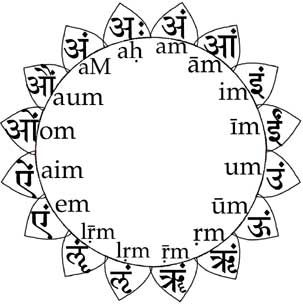
According to many spiritual traditions, East and West, in the beginning was the Word. This is true both of cosmic creation and of human history. Speech is the basis of all human culture. In the Vedic view, the faculty that most defines the human beings is speech, the essence of which is OM, the cosmic sound that creates the entire universe through its vibratory power.
The key to the origins of civilization and high thinking in humanity is linked to the development of speech. Other marks of civilization like writing and urban constructions are secondary and became possible only because of the spoken word. Yet speech arose much earlier in history than urban civilization, and it is likely that some form of speech has been with modern humans since our origins a hundred thousand years ago or more. Some societies that have not used writing have also had a high degree of verbal skills through oral poetry and story traditions.
The study of the ancient world must consider the development of ancient languages and, when existent, their literary records. In this regard, India has left us the greatest literature of the ancient world, the Vedic, and the greatest language, Sanskrit. This in itself tells a lot about the importance of Indian Civilization, its continuity and its antiquity. Only a great culture could produce and preserve such a language that has endured when all other great ancient languages have fallen into extinction.
Yet language records, by which we mean written texts, go back only some 5000 years, and even then only in fragments. This means that we cannot reduce ancient languages and the development of human speech to the available written records, however useful these might be. Efforts to explain the current languages of India have been based upon proposed migrations of people over the last three or four thousand years only. Now we can see that these follow too short a time frame to account for cultural developments and connections in the region, which were already well in place before this period.
Our modern view of the ancient world is colored by another modern discipline apart from archaeology. This is linguistics, or the comparative study of languages. Linguistics attempts to recreate postulated ancient languages. It then tries to use these creations to recover the history and the movements of people as if language was the primary determinative factor in how or why people migrated. This is sometimes called historical linguistics.
However, we must remember that linguistics is not a hard science like genetics nor based on technical evidence like archaeology. There is no genetic material in the human being that can be identified with particular languages or language families. There is, for example, no Indo-European gene or Dravidian gene or Sanskrit gene!
Linguistics reflects certain assumptions about language and its development that linguists have today. The assumption that ancient people viewed and developed their languages many thousands of years ago, the way we theorize they did cannot be accepted as scientifically proven. As we shall soon discover, science casts serious doubt on it.
For these reasons, we cannot treat linguistics as a primary source for determining what occurred in the ancient world. It may be of secondary value, it at all, for refining correlations based on more solid forms of evidence.
The discovery of connections between Sanskrit and many Languages of Europe, the Middle East and Central Asia, caused nineteenth century scholars to posit an 'Indo-European' family of languages. Such ancient languages as Latin, Greek, Iranian and Sanskrit have many affinities as do later languages in the Germanic, Slavic, Baltic and others. This led them to posit some original Proto-Indo-European language behind all these from which these different languages arose as branches.
Based on this idea, scholars proposed an original homeland of this Proto-Indo-European group somewhere in Central Asia as a kind of common point of dispersion in different directions. They also proposed that the Vedic language and culture arose as a result of migrations from this region. In addition, many tried to relate this original linguistic group with some sort of racial identity or ethnicity, not surprisingly European Caucasoid! The term 'Aryan language' is an invention of Western scholars used to mean such Indo-European languages – historical and reconstructed.
Yet the fact that Indo-European languages are related in some ways is no proof that they evolved from a single language, much less the place or time when that might have occurred. The so-called Indo-European languages have connections with non-Indo-European languages as well. The similarities between Indo-European languages can be explained in other ways than from a migration into India, for which there is no evidence. For example, there could be movements out of India or other forms of cultural diffusion.
The division of languages into families is not watertight. Vedic Sanskrit has affinities with the Dravidian and Munda languages of India also. These connections extend to common loan words and common grammatical formations even for languages that might be classified as otherwise belonging to different language families. There appears to be no easy way of fitting languages into separate families.
Our view is that just as India has maintained a continuity of peoples and cultures within its geographical zone, the same is true of its languages. A region that could develop great languages like Sanskrit and Tamil cannot be held deficient as far as language is concerned. Indeed, Vedic grammar and linguistics as reflected in Panini and other more ancient texts is the most sophisticated in the world. The creative genius of India has long gone into language, grammar, metrics, etymology, mantra and other language studies, both scientific and spiritual. It is hardly a linguistic vacuum zone, only borrowing its languages from the outside, as some linguists propose. As with genetics, so with languages. The greatest diversity and the highest antiquity of Sanskrit and its derivatives are found in India. This is strong evidence that Sanskrit was born in India.
A major problem with migration theories of languages – which include the idea that the original Sanskrit speakers migrated to India sometimes after 1500 BCE (3500 BP) – is that it was rather late in the ancient period in which populations, civilizations, customs and languages were already well established.
The main migration of peoples and of languages would have been from the south and east at the end of the Ice Age. This was a consequence of natural history and the climatic upheavals that took place at the time. It was at this time that disruptions owing to climate changes would have created the maximum necessity for such movements of people. Yet if post-Ice Age events were the main impetus behind the development of both languages and cultures, it would make most of the languages of the world order than current estimates.
At best, the Indo-European group of languages reflects older cultural connections that began with these movements of peoples at the end of the Ice Age. The dominance of so-called Indo-European civilizations like India, Iran, Greece, and Rome aided in the continuity of such linguistic groups, but not their origin.
In this regard it is helpful to look at what current science has to say about the language problem. Recent studies in the human genome suggest that some mutations in a gene called FOXP2 may have triggered the uniquely human capacity for speech and therefore language. Dates are uncertain, but all humans inhabiting the world today – traceable to an exodus from Africa perhaps 90,000 years ago- possess this capacity. Hence it is reasonable to suppose that the necessary mutations in speech production, hearing and cognition (comprehension) must have taken place 100,000 years ago at the least. – See "Molecular evolution of FOXP2, a gene involved in speech and language"
Chronology is not the only problem with linguistics as a tool in history. Linguistics methods fail scientific tests also. As published in Mathematics in the archaeological and Historical Sciences, when Kruksal, Dyen and Black applied statistical tests to the languages that make up the Indo-European family, they found results that contradicted the most basic assumption of linguists – that they form a language family. The most important member is of course Sanskrit, but their analysis threw up a major contradiction: Indian and Iranian languages failed the grouping test! This is a bombshell, for according to Info-European linguistics, Indo-Iranian is the lynchpin of the whole discipline, but the one quantitative test that was applied to the hypothesis discredited it.
Struck by this, Cavalli-Sforza highlighted that the Kruksal, Dyen and Black study "…found no similarity at all between Italic and Celtic languages, nor between Indian and Iranian ones… The non-identification of an Indo-Iranian group by Dyen et al. is the major departure from the conclusions accepted by the majority of traditional linguists. See "Great Human Diasporas" Addison-Wesley, 1995: page 190. In other words, much of what was regarded as solid fact in linguistics remains highly questionable, if not outright wrong.
The point to note here is that the tests do not deny that Sanskrit and ancient Iranian (Avestan) are related. They question the methodology used in deriving language families, which is the main tool of comparative linguistics. Since comparative linguistics is the basis of various migration theories, including the Aryan invasion (or migration) theory, it is hardly surprising that both comparative linguistics and invasion-migration theories should have fallen victims to rigorous scientific analysis. Both now stand discredited for the same reason: they are unscientific.
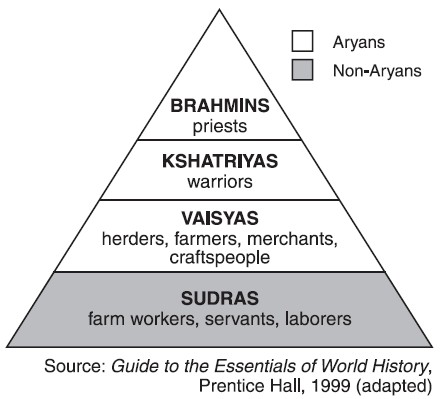
Unfortunately, these proposed Vedic Aryan hordes have been portrayed by western historians as primitive Nazis bringing racial oppression into ancient India. These mythical Aryan invaders have been attributed with caste oppression and all other Indian social evils. Yet such scholars fail to note that the type of class and clan society we find in the Vedas is much like what existed throughout the ancient world, continues in tribal societies everywhere, and persists in some forms in modern societies as well. It is not an Aryan invention.
The rule was the same in most ancient cultures; chieftains and priests formed a special group at the top. The common people were divided into merchants, farmers and servants, with some populations on the outside of the social order kept in the distance. Such a division does not reflect any single political or religious ideology, much less a particular ethnicity, but just the practicalities of organizing society in the pre-technological and largely non-urban world (even in the Harappan area with its numerous urban sites the great majority of people lived in villages).
There is no need to invent the Aryans to bring in the caste system, any more than to bring in the Sanskrit language. The pride of birth is high and often an important source of status in all cultures and societies. It does not require invaders to produce it. Such abuse of status is a common human problem, which continues today in various forms. It cannot simply be used to blame some mythical Aryans of thousands of years ago.
Yet today, even when most western historians have rejected the scenario of the pillaging Aryan hordes, they are doing very little to correct the distortions caused by it, often allowing these wrong accounts to continue in old textbooks without revision. They have thereby allowed the anti-Hindu or anti-Vedic sentiments generated by such ideas to go on without any serious challenge. Such characterizations border on racism and breed conflict and misunderstanding. It is necessary to remove these Aryan distortions for a correct view of ancient India. That is the part of the purpose of writing these articles.
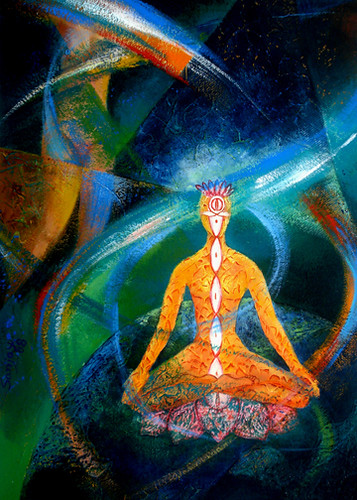
What we call history is, to a greater extent, an artificial line, defining people are either civilized or uncivilized based upon markers like writing, urban development or the use of metals that may not be crucial to the real character of people. It is unlikely that earlier humanity was any less human or any less sensitive than we are, even if they did not build cities like we do. So-called primitive peoples often produced art and literature far superior than what is being produced today.
It is also well known fact of history that so-called primitive people in the colonial era, like the Native Americans, were often more honest, kind and truthful than their European conquerors, who never honored a single treaty with them. Scientifically speaking, the yogi in a cave and the caveman are indistinguishable to the urban markers of modern civilization, though they are radically different relative to the evolution of consciousness.
In this regard, Hindu records through the Vedas and Purans suggest that human civilization – or at least some sort of advanced culture capable of spiritual development – has been going on much longer than our recorded history. These texts connect human history with longer natural and cosmic cycles, and current humanity with earlier humanities of tens of thousands of years ago.
It has also been the view of many spiritual thinkers worldwide that there were earlier humanities that underwent their own cultural developments, though not necessarily in a technological manner. The ancient Greeks, Egyptians and Babylonians firmly believed this. We are only now beginning to suspect these possibilities. What was previously regarded as the beginning of history around 3000 BCE (5000 BP – Before Present) is now being seen as part of a longer natural history, with culture, agriculture and language being much older.
The Vedas project a 'Yuga' theory of historical and cosmic development, the idea of periodic cycles of humanity and of nature, broken by great natural catastrophes. This fits in well with current scientific theories about natural history through the Ice Ages and warm periods like the one we are living in today. There are two cycles of 41,000 years and 24,000 years duration that overlap the 100,000-year Ice Age Cycle, which are main cycles of natural history scientists are looking at relative to early humanity. These are characterized by the position of the Earth's axis relative to the Sun, and therefore the amount of energy that the Earth receives. Though the exact relationships are not known, these cycles have a bearing on the world's climate and a profound effect on the life of all species. The Vedic Yuga cycle of 24,000 years reflects similar time frames.
The idea of earlier Manus and the earlier kalpas, or world-ages, such as we find in the Puranic literature, may reflect memories of these earlier phases of mankind prior to what our current culture recognizes as history. This Hindu connection to prehistoric eras of human species may be responsible for the Hindu idea of an eternal tradition of truth (Sanatan Dharma). It extends to the Hindu view of the universe, which is defined according to longer natural cycles of yugas extending into the age of the universe itself and a recognition that our current universe is only one of many that exists throughout the endless expanse of time and space.
From the standpoint of modern science, this 'Hindu view of time' better reflects the movement of natural history (and cosmology) that is marked by cycles and cataclysms over long periods of time. It stands in stark contrast to Western historical models that follow a linear and progressive model of history, generally focused on events of the last 5000 years, if not the last 500. These place human history apart from the nature's cycles and often opposed to them as well.
Such linear time models extend to Western politics and religion. The Western mind then interprets history according to its own linear models, and ignores the role of natural history and its cycles that was the real time frame in which ancient people actually lived.
As we move into an ecological age, we must once more respect natural history and natural time cycles. This will take the modern mind back in the direction of the Hindu view of time and the Hindu approach to history that has always based itself on such natural time cycles and a regard for the much greater antiquity of the human species. It also accommodates new discoveries in fields as diverse as natural history, genetics and cosmology.

The natural history of our species is dominated by one very significant natural event over the last fifteen thousand years. This is the end of the last Ice Age. The end of the Ice Age radically changed climates worldwide, submerged extensive coastal regions and caused extensive migrations of people. Its effects on India and Greater India were particularly important, devastating and transforming to the entire environment. These events form the basis of any real examination of the history of the region or of the history of humanity as a whole.
India's links with Greater India were even closer ten thousand years ago and earlier during the Ice Age period when the whole region – from peninsular India to Indonesia – formed at various times either a single landmass or a massive archipelago of islands and peninsulas separated by relatively shallow, easy to cross sea-lanes. This created a vast landmass known as 'Sunda Land'. Large areas of Sunda Land along with substantial strip of the Indian coast were submerged by rising sea levels when the last Ice Age ended. This has to be the natural background from which to begin any study of the history and culture of the Indian people. Their history cannot be set apart from these natural connections with Greater India and its populations. Nor can we ignore the impact of the cataclysms on the inhabitants of the region.
Sunda Land and South India, especially the coastal regions, were the most favorable places for populations. Since they both had abundant heat and moisture, throughout the Ice Age period, when much of the northern hemisphere was cold, arid and inhospitable. This may be reflected in South Indian recollections of Kanya Kumari, a larger Pacific continent to the South, and to Vedic references to the sea and early maritime cultures. It is also why the peoples of India and regions referred to as Greater India are genetically older and more diverse than those of Europe and West Asia. This is because these regions constitute a single natural zone united by geography, climate and natural history. In view of this unity which is of untold antiquity and is also reflected in the history and culture of the region, it is properly called Greater India. Modern terms like Indo-China and Indonesia are no more than recognitions of this historical fact.
When sea levels rose, it was these best habitable lands that were lost, triggering migrations to the interior and the north. This was probably the greatest and most consequential migration in human history that set in motion most of the cultures and changes to civilization that came later. It holds one of the keys to understanding the region's prehistory along with its chronology.
.png)
Human beings and their culture arise out of the land like other species. They are part of their natural environment to which they must adapt in order to survive. Different cultures naturally reflect the circumstances of their geographic regions, climates and ecosystems. This is more important the further back in time we go and the more we look outside of urban environments, but even these are not above this law. To understand human history, we must look to natural history, particularly for ancient cultures that were much closer to the land than we are today. This begins with the facts of geography.
The motherland or Matri Bhoomi is the first guru of the people, one might say, just as the mother is the first guru of the child. The motherland of India is not only a great teacher but also a great provider of all aspects of life and humanity, holding a spiritual as well as material abundance for her children.
Mother India is not just a cultural and spiritual formulation but also a geographical reality, a unique formation of nature. With the highest mountains in the world and perhaps the greatest set of rivers, the land of India has shaped its people and its culture probably more than anything else has. This large tropical and subtropical subcontinent comes under the influence of the same natural forces of climate and geography, giving rise to similar responses from the people inhabiting the region.
India is a vast subcontinent located between the great mountain range of the Himalayas and the sea. It is a region defined by its special geography, which strongly insulates it from outside influences. The northern mountains are effective boundaries and remain almost impassable even today. The mountains to the west are part of a large desert region that serves to effectively block any easy access from that direction as well. The mountains of the east lead to successive ranges and almost impenetrable jungles in some of the wettest regions on Earth.
India's greatest access has always been by sea. From the west and into the Arabian Sea, India has a natural maritime route to the Persian Gulf, Arabia and the Red Sea. To the east through the Bay of Bengal it has an access to Greater India, Malaysia and Indonesia. Yet the southern and Eastern routes are much easier to travel because they lead to well-watered regions, while the Western sea routes cross extensive desert coastlines. Western theories like the Aryan Invasion theory that has the main culture of peoples of ancient India come from the northwest are contrary to the facts of the geography and natural history of the region that is connected more to Southeast Asia. The easy maritime access to the southeast is why in historical times Indian civilization naturally spread by sea to Malaysia, Indochina and Indonesia, following the course of the rivers and coastlines. India's geography and ecology provide the basis for its unique culture that has sustained itself through the millennia and also influenced the cultures around it which did have such as access to arable land and vast rivers.
It is a fact of history, growing out of the natural environment and geography that through most of its history India has been a maritime nation, depending upon a network of travel and trade on large rivers into the sea. Most western views of the history of India fail to take into account the natural history or the geographical ties of India, which have always been to the south and the east.
North India forms a vast plain defined by a series of great Himalayan rivers from the Indus in the west to the Brahmaputra in the east. These rivers provide an agricultural potential unparalleled in the rest of the world. While the civilization of ancient Egypt rested upon one great river, the Nile, and that of Mesopotamia on two great rivers, the Tigris and the Euphrates, ancient India had over a dozen such rivers and in a wetter and warmer subtropical climate. These great rivers of North India lead into the ocean either by the Arabian Sea or by the Bay of Bengal and would naturally have led the culture towards maritime travel as well.
South India forms a plateau but also has its great rivers like the Narmada, Krishna, Kaveri and Godavari that draw their waters from the heavy monsoon rains. The coastal regions are particularly well watered because the western and the eastern mountain ranges trap the rain-bearing monsoon winds. As a relatively small peninsula with oceans on both sides, its geography similarly creates a compelling connection to the ocean. Even connections to North India were often easier by sea than by land routes from South India.
India is blessed with probably the best agricultural region in the world. Though densely populated, even today its population is less dense than the United States when measured in terms of arable land. Its unique subtropical mountain, river and maritime ecosystem has allowed it to develop greater populations than Europe and the Middle East combined and made it a fertile ground for cultural growth. This is another reason why the idea that India needed outside populations to provide its people or its culture makes a little sense. Not surprisingly, ancient India's accounts of history and geography emphasize this great land with the Himalayas in the north, extending down to the sea, finding that to be a world in its own right and so are not much concerned with outside regions.
The greater geographical region in which India is located is dominated by two major natural forces; the tropical (and subtropical) climate and the seasonal monsoon rains. The countries of Greater India come under the same influences, depending upon rivers that flow from their northern mountains that are extensions of the Himalayas. In terms of climate and natural history, India shares more with greater India than with West Asia, Central Asia or Europe. This is reflected in the close connections between India and Greater India that go back tens of thousands of years. These run the gamut of the natural world including climate, flora and fauna and the people inhabiting the region.
We cannot, therefore, separate human achievements from the region's natural history. We must look for interpretations and explanations that connect the rhythm of nature with the progress (or decline) of civilizations. Our ancients understood this well when they sought to harmonize their lives with natural. They saw the divine manifesting everything in nature, living and non-living – from the grandest to the most humble. The Yajur Veda says:
Isavasyamidam sarvam, yatkincit jagatyam jagat.
"All this universe is pervaded by the Lord, whatsoever moving thing there is in this moving world"
The ideals of nature worship that we see in Vedic texts and in other ancient scriptures and teachings reflect a deeper connection with the Divine Spirit pervading nature. It is not at all primitive, but a progressive, all-comprehensive understanding of life. The truth of interconnectedness and interdependency, all the need of co-existence – that the human being is a part of nature and cannot survive without it – are hidden in these rituals. It reflects a deeper inner and an ecological vision, such as we are only just now beginning to discover and appreciate in this modern, ecological age.

Natural history includes the older history of our species before what we could call civilization was invented, as well as our interaction with the natural environment and its development over time.
Most history books today overlook the natural history of our species, which goes back tens of thousands of years before recorded history. This can have misleading consequences, particularly relative to the origins of civilization that depended upon earlier advances in agriculture, language and social interaction in the prehistoric era.
History books similarly ignore the importance of the natural environment as the prime factor in shaping culture and look upon political or economic factors as more significant. Yet floods, droughts and other natural calamities are usually more significant for beginning, ending or radically altering civilizations than simply internal social struggles.
Culture and civilization are primarily the human response to the natural environment and its changes. History is the record of this response. What we call history is but a phase in the natural history of our species and its greater development. Such a more 'ecological approach' to history is necessary in the current ecological age when we are again recognizing the importance of nature in shaping who we are. Human beings are part of the planet and cannot be looked upon as a species existing in isolation. Our activities affect and alter our ecosystems in ways that determine what our culture will be and how long it is likely to endure. This means that the natural history of India is the best context in which to start out examination of the human history of the region.
The natural history of India, meanwhile, is most closely related to that of Greater India(South East Asia), which has a similar pattern of mountains and monsoons in a tropical region. Therefore, one of the most significant consequences of this orientation to India's natural history takes us away from the focus on Central and West Asia as the basis of Indian civilization that has for too long dominated the discourse. This has particularly important consequences relative to the natural history of both regions over the past more than 10,000 years.
Questionable racial and linguistic theories, like the Aryan Invasion, either not based upon or even contrary to archaeological and other scientific evidence, have dominated the discourse. Or Marxist theories based upon modern ideas of politics have been imposed on ancient peoples, ignoring the natural setting in which they lived. It directs us to Greater India.
Sir William Jones was the first to show that there are many common cognate words shared by Sanskrit and European languages. Speaking to the Asiatic Society in Calcutta on February 2, 1786, Jones made a statement which was soon to become quite famous:
…the Sanskrit language, whatever be its antiquity, is of a wonderful structure; more perfect than the Greek, more copious than the Latin, and more exquisitely refined than either, yet bearing to both of them a stronger affinity, both in the roots of verbs and in the forms of grammar, than could possibly have been produced by accident; so strong, indeed, that no philosopher could examine them all three, without believing them to have sprung from some common source, which, perhaps, no longer exists. -- Quoted in the American Heritage Dictionary of the English Language, ed. William Morris (Boston and New York: Houghton Mifflin, 1969), article by Calvert Watkins, p. XIX.
Common Words Shared By English and Sanskrit
Advocate | Adhivaktr |
Bind | Bandhi |
Bright | Bharajat |
Brother | Bhatr |
Candle | Chandra |
Cardio | Hrd |
Come | Gam |
Deity | Devata |
Eight | Ashta |
End | Anta |
Genus | Janus |
Gnosis | Gnana |
Idea | Vidya |
Identity | Idamta |
Immortal | Amtra |
Kalon | Kalyana |
Mega | Maha |
Man | Manu |
Mind | Manas |
Mortal | Mrta |
Mother | Matr |
Same | Sama |
Three | Tri |
Vivi | Jiva |
Voice | Vaca |
Wind | Vata |
Yoke | Yoga |
Young | Yuvan |

India or Bharat's own school of thought and its own world view emphasizes dharma or natural law as the main factor behind both human life and the working of the universe. It sees human history in the context of the development of life and consciousness, and not just in terms of dates, events and inventions.
The Vedic vision begins with the idea of an eternal tradition of truth, wisdom and knowledge. This, in Sanskrit is called 'Sanatan Dharma' – the eternal dharma or the way of truth. In the Vedic view, consciousness underlies the entire universe of matter, energy and mind and provides the force that motivates and moves them.
The Vedic vision has important historical ramifications. According to its view, there was a rishi or yogic culture at the beginning of human history, not only in India but throughout the world. We find the echoes of this great tradition in the many stories of the great sages, seers and prophets of ancient times – such as occur in the annals of cultures as diverse as the Mayan American, the Chinese, the Egyptian, Babylonian, Greek, Celtic and Hindu. These Hindu rishis or seers were said to have established the paths to spiritual knowledge for humanity at the beginning of this world age, which we can please roughly around the end of the last Ice Age about 10,000 years ago.
In the Vedic view, cosmic intelligence is the basis of all life. This places a greater emphasis on the evolution of consciousness than that of mere outer forms. What we see in nature is but a reflection of a deeper evolution of mind and consciousness that is a universal potential, not just a chance happening on Earth.
Consciousness pervades the entire universe, animate and inanimate. In living things, as per the limitations of body and mind, that consciousness has the capacity of feeling in the plant kingdom, and has an additional capacity of sensation in the animal kingdom. With human beings it has a power of intelligence through which the very creature can realize its oneness with God or the universal consciousness. That is the real goal of life in the Vedic sense. The Aitareya Upanishad and Aranyaka show this quite well.
 India represents one of the great civilizations of the world, with its own unique, diverse and profound culture going back many thousands of years. Notably, India has maintained the continuity of its culture perhaps better than any other civilization in the world, preserving its primary cultural and religious practices for over five thousand years. And this is going only by the preserved records in archaeology and written literature. By a proper reading of the Vedas and Purans we can get a glimpse of the primordial origins going back even before the ending of the last Ice Age.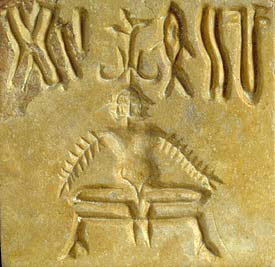
The civilization of India has always oriented itself to the spiritual life, the liberation of spirit, as the main goal of human existence. This we see in its many great yogic, religious and philosophical traditions, and in the many yogis, sadhus, mystics and sages it has produced in every generation. Whether is is meditation, yoga asanas, mantras, chanting, ritual or prayer, we find all such higher subjects taken up in great detail, depth and comprehensiveness. Certainly, at a spiritual and yogic level, India can claim to be the great mother of world civilization. We find this same focus in ancient India, whether in figures in yoga postures on ancient Harappan Seals or great Vedic chants to the cosmic powers.
Yet the civilization of India was rich not only spiritually but also materially. It had great wealth in agriculture, textiles, gold and gems that made it a goal for traders worldwide. It was this search for the legendary wealth of India which motivated Columbus to sail towards America in the first place and which had earlier brought Roma, Greek and Babylonian traders to the region.
According to economist Angus Maddison in The World Economy: A Millennial Perspective the region that today comprises the Indian Subcontinent held the largest share of the world's gross domestic product until the 16th century. India was the richest for over 75% of the world's counted calendar of history.
Ancient India also had a powerful warrior class and its own traditions of the martial arts. Complementary to the spiritual dharma was a kingly dharma to protect those leading the spiritual life and to maintain peace and prosperity for the entire region. (Most of the Mahabharata devotes itself to the raja Dharma or the way of kings, which forms an entire section of the Shanti Parva.) But India did not create a cult of foreign conquest. Even the king had to bow down before the ascetic and the renunciate and to retire to the forest for spiritual practices in his later years.
India today carries on this ancient spiritual and cultural heritage, which is developing anew in the modern world since India's return to its independence as a nation. India's gurus travel worldwide, with followers in every land, bringing deeper spiritual practices of yoga and meditation to all people. India's scientists are renowned world-wide for their skill and reliability. Its merchants are once more contribution to global prosperity and competing successfully in all major cities of the world.


Russia
The famous author Mark Twain describes India as 'the cradle of the human race' and 'birthplace of human speech.' In his ten volume. Story of civilisation, author William Durant declares 'India was the motherland of our race' and 'Sanskrit the mother of European Languages.' Voltaire and Schlegel are convinced that everything has come down to us from the river Ganges. And according to Max Muller the Famous orientalist 'the Vedas are the oldest book in existence and carries us back to times of which we have no records anywhere.'
In his book 'Proof of Vedic Culture's Global Existence' Stephen Knapp has compiled information which confirms that the Vedic culture was once global, and we would like to share some of this Information with you. At least 90% of this information we have found to be correct. There are a few grey areas, but see what you think. If you agree, let us know, if you disagree, also let us know, and if you can provide additional information definitely let us know.
In His book, diary of a travelling preacher, Indradyumna Swami records a conversation with professor Alexander Vasilyavich Medvedev, chairman of the religious affairs committee of the Urals region.
Professor Medvedev: "The problem amongst our leaders may not be so much in having to accept your movement, but to accept that the Vedic culture could have very well been the original culture here in Russia. You know in Russia practically all the scientists accept that the Vedic culture once flourished here, the centre being in the Volga river region.
The debate among our scientists is only if the Aryans came from India or they originated here. There is much evidence to the fact that Vedic culture existed here, most notably the Russian Veda"
"The Russian Veda" Interrupted Indradyumna Marharaj.
"Yes, it is famous amongst our people, it is as old as Russia, and the stories are exactly like those in the Vedic scriptures. The central figure of the Russian Veda is a personality called Krishen. He is the upholder of spiritual truths and the killer of many demons. His killing of a witch and snake are exactly like the history of child Krsna killing the putana and aghasura demons in the bhagavat puranas. But the Russian Veda is not intended for children. It is full of spiritual truths."
Name | Sanskrit | Sanskrit meaning |
Russia | Rishiya | Land of the Rishis |
Moscow | Moksha | Salvation, goal of all Rishis |
Bolshevik | Bal-sevik | Rishis seeking spiritual power |
Rubble | Raya-bal | Strength of the realm |
Krasnoyorak | Krsna | Russian town named after Lord Krsna |
Agone (fire) | Agni | Vedic fire God |
Andropov | Indra | Vedic demigod |
Siberia | Shibeerya | The locals still call their land Shibir |
Soviet | Svet | White as in white snow covered region |
Svetlana | Svetanana | Svetlana, the name of Stalins daughter is from the Sanskrit word svetanana meaning fair faced |
During the nineteenth century when Europe was greatly appreciating the Vedic culture, Sir Henry Maine, a scholarly member of the viceroy of Indias council declared about Germany "a nation has been born out of Sanskrit". Below we provide evidence of the Vedic influence throughout Germany and Europe.
Name | Sanskrit | Sanskrit meaning |
Deutschland | Daityasthan | Land of the Daityas. ( Daitya refers to mother Diti and Kashyapa muni, the Dutch also share this link.) |
Danube river | Danuv | The Daityas were also known as the Danuv community due to Kashyapa munis marriage to Danu, who is also known as one of the primary Goddesses of the celts. |
German | Sharman | A common hindu surname |
Hindenberg | Hindu-durg | The fort of the Hindus |
Heidelberg | Haya-dal-durg | Fort garrisoned by horses |
Stein | Stan | Place |
Ramstein | Ramstan | Place of Lord Rama |
Rome | Rama | Lord Rama |
Ravenna (Italian city) | Ravanna | Demon killed by Lord Rama |
Budapest | Buddaprastha | City dedicated to Lord Buddah |
Paris | Parameshwari | Vedic Goddess |
Amsterdam | Antardham | Region below sea level |
Scandinavia | Skanda | Skanda is the son of Lord Siva. Naviya is Sanskrit for naval settlement. Scandinavians were the mariner descendants of the Vedic ksatriyas who worshipped Skanda |
"In the rig veda we have more real antiquity than in all the inscriptions of Egypt or Ninevan … The Vedas is the oldest book in existence." (Max Muller)
"After the latest research into the history and chronology of the book of the old testament, we may safely call the rig veda the oldest book, not only of the Aryan community, but the whole world." (Reverend Morris Philips)
"The Vedas has a twofold interest, it belongs to the history of the world and to the history of India. In the history of the world the Vedas fills a gap which no literary work in any language could fill." (Max Muller)
Judaism
Name | Sanskrit | Sanskrit meaning |
Judaism | Yaduism | The Yadu dynasty which Lord Krsna appeared in. It is common for the y and j to become interchangeable hence, Yaduism, Yeduism and finally Judaism |
Jerusalem | Yadu-isha-layam | The township of Lord Krsna. Yadu - dynasty of Lord Krsna, Isha – God, alayam – abode or place |
Israel | Ishwaralaya | The abode of Isha – God |
Shalome | Ishalayam | The abode of God. (Ishalayam - shalayam - shalome) |
Talmud (jewish scripture) | Tal is Sanskrit for palm. Mud comes from mudra which means imprint or script, hence Talmud is Sanskrit for palm leaf manuscript | |
Syria | Surya | Vedic sungod |
Palestine | Palustin | Vedic sage |
Ramallah (Palestine city) | The city of Lord Rama | |
Adam | aadim | The first or most ancient man |
Abraham | Brahma | Vedic demigod |
Star of David | A simplified version of the sri yantra, connected to the Goddess Laxmi Devi. Drawn in front of many Hindu homes | |
David | Devi-d | Bestowed by the mother Goddess |
Semites | Shyam | Semites were the descendants of Shem which originates from Shyam, Lord Krsna |
Horites | Harites | Worshipers of Hari (Krsna) |
"I am convinced that everything has come down to us from the banks of the river Ganges" (Voltaire)
"India was the motherland of our race, and Sanskrit the mother of European languages. She was the mother of our philosophy … of our mathematics … of the ideals embodied in Christianity … of self government and democracy…mother India is in many ways the mother of us all." (William Durant. Author of the ten volume, story of civilisation)
"Everything, absolutely everything is of Indian origin." (Friedrich Schlegel)
Greece
Zeus the Greek God of heaven, travels planet to planet on a mystical six horse chariot wielding a trident. Indra the Vedic king of heaven also travels on a mystical six horse chariot wielding a thunderbolt.
Name | Sanskrit | Sanskrit meaning |
Parthia | Partha | Arjuna, devotee of Lord Krsna |
Hercules | Hari-culeesh | In the lineage of Hari (Krsna) |
Hari-tutay | Greek greeting | May Hari (Krsna) bless you |
Prometheus | Pramathes | Lord Siva |
Demetrius | Deva-mitra | Friend of the Gods |
Pythagoras | Peeth-guru | Peeth means place of education |
Aristotle | Arishta-taal | God, the warder of calamities |
Socrates | Sukrutus | One whose conduct is meritorious |
"This Garuda column of Vasudeva (Visnu), the God of Gods, was erected here by Heliodorus, a worshiper of Visnu, the son of dion, and inhabitant of taxila, who came as Greek ambassador from the great king Antialkidas to king Kasiputra Bhagabadra, the savior, then reigning prosperously in the fourteenth year of his kingship. Three important precepts when practiced lead to heaven; self restraint, charity and conscientousness."
The Heliodorus column, erected in 113 B. C. by the ambassador of Greece. Over 2000 years ago the Greek ambassador worshiped Visnu.
Greek Silver coins made by Agathaclose, a Greek ruler from the 2nd century B.C., bear the imprint of Krsna and Balarama and are displayed in several museums.
"The whole of Greece from the era of the supposed Godships of Poseidon and zeus down to the close of the Trojan war was Indian in language, sentiment, religion, peace and war" (India in Greece, E. Pococke)
"Almost all the theories, religious, philosophical and mathematical as taught by the pythagorans were known in India in the 6th century B. C." (Professor G. Rawlinson)
"When Greece and Italy, those cradles of modern civilisation, housed only the tenants of the wilderness, India was the seat of wealth and grandeur." (History of British India, Thornton)
Name | Sanskrit | Sanskrit meaning |
Korea | Gauriya | Gouri, Vedic Goddess |
Casseopeans | Kashyapa muni | Followers of the Vedic sage |
Kashmir | Kashyapa muni | Named after the Vedic sage |
Caspean sea | Kashyapa muni | Named after the Vedic sage |
Iran | Ariana | Land of the Aryans |
Guatamala | Guatam | Abode of the Vedic sage Guatam |
Egypt | Ajapati | Lord Rama, the illustrious scion of Aja. Their kings were named Ramses meaning Rama the God |
Persia | Parasu | Vedic warrior Parasurama |
Mexico | Maghico | Vedic demigod Lord Indra |
Babylonia | Bahubalaneeya | Realm of Vedic king Bahubal |
Mauritius | Marichi | Vedic warrior from Ramayana |
Australia | Astral-alaya | Land of the missiles |
America | Amaraka | Land of the immortals |
Devonshire | Devaneshwar | Land of the Gods |
Canterbury | Shankapury | Township of Lord Siva |
Anglesey | Angulesh | Visnu, Lord of the Anguli country |
England | Angulistan | Angulistan-Anguliand-England |
Britain | Brihat-sthan | Great land or islands |
The suffix sthan comes from the Sanskrit word stan meaning land. Afghanistan, Turkisthan, Kurdisthan, Ghabulisthan, Kazakstan, all reflect their Vedic connection. Arabia comes from the word Arvasthan.
And finally … Throughout the last two thousand years, many changes have taken place. The most influential being the rise of Christianity, followed by the religion of Islam. While the world was being converted to these new religions, anything that contradicted or existed before them was eradicated. However it is impossible to destroy everything, and if one looks with a honest heart and an open mind, they will surely see that the original culture from which all other cultures have sprung is the ancient Vedic culture. The Vedas themselves are very much like mother India. They are simply sitting there waiting for you to discover her. They are not attacking you with a sword or pointing a gun at you, they are simply sitting there patiently waiting.
Bottom of Form
