A great video that proves the existence of the Lord Sri Krishna as well as the Mahabharata war!
Krishna: History or Myth from Saraswati Films on Vimeo.

Krishna: History or Myth from Saraswati Films on Vimeo.
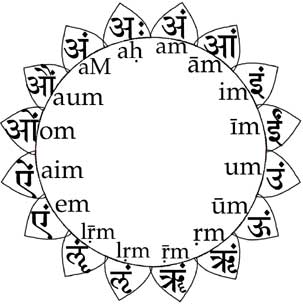
According to many spiritual traditions, East and West, in the beginning was the Word. This is true both of cosmic creation and of human history. Speech is the basis of all human culture. In the Vedic view, the faculty that most defines the human beings is speech, the essence of which is OM, the cosmic sound that creates the entire universe through its vibratory power.
The key to the origins of civilization and high thinking in humanity is linked to the development of speech. Other marks of civilization like writing and urban constructions are secondary and became possible only because of the spoken word. Yet speech arose much earlier in history than urban civilization, and it is likely that some form of speech has been with modern humans since our origins a hundred thousand years ago or more. Some societies that have not used writing have also had a high degree of verbal skills through oral poetry and story traditions.
The study of the ancient world must consider the development of ancient languages and, when existent, their literary records. In this regard, India has left us the greatest literature of the ancient world, the Vedic, and the greatest language, Sanskrit. This in itself tells a lot about the importance of Indian Civilization, its continuity and its antiquity. Only a great culture could produce and preserve such a language that has endured when all other great ancient languages have fallen into extinction.
Yet language records, by which we mean written texts, go back only some 5000 years, and even then only in fragments. This means that we cannot reduce ancient languages and the development of human speech to the available written records, however useful these might be. Efforts to explain the current languages of India have been based upon proposed migrations of people over the last three or four thousand years only. Now we can see that these follow too short a time frame to account for cultural developments and connections in the region, which were already well in place before this period.
Our modern view of the ancient world is colored by another modern discipline apart from archaeology. This is linguistics, or the comparative study of languages. Linguistics attempts to recreate postulated ancient languages. It then tries to use these creations to recover the history and the movements of people as if language was the primary determinative factor in how or why people migrated. This is sometimes called historical linguistics.
However, we must remember that linguistics is not a hard science like genetics nor based on technical evidence like archaeology. There is no genetic material in the human being that can be identified with particular languages or language families. There is, for example, no Indo-European gene or Dravidian gene or Sanskrit gene!
Linguistics reflects certain assumptions about language and its development that linguists have today. The assumption that ancient people viewed and developed their languages many thousands of years ago, the way we theorize they did cannot be accepted as scientifically proven. As we shall soon discover, science casts serious doubt on it.
For these reasons, we cannot treat linguistics as a primary source for determining what occurred in the ancient world. It may be of secondary value, it at all, for refining correlations based on more solid forms of evidence.
The discovery of connections between Sanskrit and many Languages of Europe, the Middle East and Central Asia, caused nineteenth century scholars to posit an 'Indo-European' family of languages. Such ancient languages as Latin, Greek, Iranian and Sanskrit have many affinities as do later languages in the Germanic, Slavic, Baltic and others. This led them to posit some original Proto-Indo-European language behind all these from which these different languages arose as branches.
Based on this idea, scholars proposed an original homeland of this Proto-Indo-European group somewhere in Central Asia as a kind of common point of dispersion in different directions. They also proposed that the Vedic language and culture arose as a result of migrations from this region. In addition, many tried to relate this original linguistic group with some sort of racial identity or ethnicity, not surprisingly European Caucasoid! The term 'Aryan language' is an invention of Western scholars used to mean such Indo-European languages – historical and reconstructed.
Yet the fact that Indo-European languages are related in some ways is no proof that they evolved from a single language, much less the place or time when that might have occurred. The so-called Indo-European languages have connections with non-Indo-European languages as well. The similarities between Indo-European languages can be explained in other ways than from a migration into India, for which there is no evidence. For example, there could be movements out of India or other forms of cultural diffusion.
The division of languages into families is not watertight. Vedic Sanskrit has affinities with the Dravidian and Munda languages of India also. These connections extend to common loan words and common grammatical formations even for languages that might be classified as otherwise belonging to different language families. There appears to be no easy way of fitting languages into separate families.
Our view is that just as India has maintained a continuity of peoples and cultures within its geographical zone, the same is true of its languages. A region that could develop great languages like Sanskrit and Tamil cannot be held deficient as far as language is concerned. Indeed, Vedic grammar and linguistics as reflected in Panini and other more ancient texts is the most sophisticated in the world. The creative genius of India has long gone into language, grammar, metrics, etymology, mantra and other language studies, both scientific and spiritual. It is hardly a linguistic vacuum zone, only borrowing its languages from the outside, as some linguists propose. As with genetics, so with languages. The greatest diversity and the highest antiquity of Sanskrit and its derivatives are found in India. This is strong evidence that Sanskrit was born in India.
A major problem with migration theories of languages – which include the idea that the original Sanskrit speakers migrated to India sometimes after 1500 BCE (3500 BP) – is that it was rather late in the ancient period in which populations, civilizations, customs and languages were already well established.
The main migration of peoples and of languages would have been from the south and east at the end of the Ice Age. This was a consequence of natural history and the climatic upheavals that took place at the time. It was at this time that disruptions owing to climate changes would have created the maximum necessity for such movements of people. Yet if post-Ice Age events were the main impetus behind the development of both languages and cultures, it would make most of the languages of the world order than current estimates.
At best, the Indo-European group of languages reflects older cultural connections that began with these movements of peoples at the end of the Ice Age. The dominance of so-called Indo-European civilizations like India, Iran, Greece, and Rome aided in the continuity of such linguistic groups, but not their origin.
In this regard it is helpful to look at what current science has to say about the language problem. Recent studies in the human genome suggest that some mutations in a gene called FOXP2 may have triggered the uniquely human capacity for speech and therefore language. Dates are uncertain, but all humans inhabiting the world today – traceable to an exodus from Africa perhaps 90,000 years ago- possess this capacity. Hence it is reasonable to suppose that the necessary mutations in speech production, hearing and cognition (comprehension) must have taken place 100,000 years ago at the least. – See "Molecular evolution of FOXP2, a gene involved in speech and language"
Chronology is not the only problem with linguistics as a tool in history. Linguistics methods fail scientific tests also. As published in Mathematics in the archaeological and Historical Sciences, when Kruksal, Dyen and Black applied statistical tests to the languages that make up the Indo-European family, they found results that contradicted the most basic assumption of linguists – that they form a language family. The most important member is of course Sanskrit, but their analysis threw up a major contradiction: Indian and Iranian languages failed the grouping test! This is a bombshell, for according to Info-European linguistics, Indo-Iranian is the lynchpin of the whole discipline, but the one quantitative test that was applied to the hypothesis discredited it.
Struck by this, Cavalli-Sforza highlighted that the Kruksal, Dyen and Black study "…found no similarity at all between Italic and Celtic languages, nor between Indian and Iranian ones… The non-identification of an Indo-Iranian group by Dyen et al. is the major departure from the conclusions accepted by the majority of traditional linguists. See "Great Human Diasporas" Addison-Wesley, 1995: page 190. In other words, much of what was regarded as solid fact in linguistics remains highly questionable, if not outright wrong.
The point to note here is that the tests do not deny that Sanskrit and ancient Iranian (Avestan) are related. They question the methodology used in deriving language families, which is the main tool of comparative linguistics. Since comparative linguistics is the basis of various migration theories, including the Aryan invasion (or migration) theory, it is hardly surprising that both comparative linguistics and invasion-migration theories should have fallen victims to rigorous scientific analysis. Both now stand discredited for the same reason: they are unscientific.
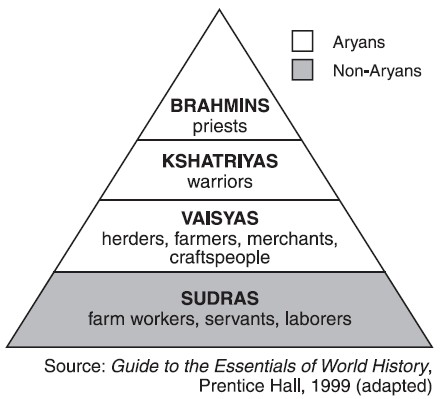
Unfortunately, these proposed Vedic Aryan hordes have been portrayed by western historians as primitive Nazis bringing racial oppression into ancient India. These mythical Aryan invaders have been attributed with caste oppression and all other Indian social evils. Yet such scholars fail to note that the type of class and clan society we find in the Vedas is much like what existed throughout the ancient world, continues in tribal societies everywhere, and persists in some forms in modern societies as well. It is not an Aryan invention.
The rule was the same in most ancient cultures; chieftains and priests formed a special group at the top. The common people were divided into merchants, farmers and servants, with some populations on the outside of the social order kept in the distance. Such a division does not reflect any single political or religious ideology, much less a particular ethnicity, but just the practicalities of organizing society in the pre-technological and largely non-urban world (even in the Harappan area with its numerous urban sites the great majority of people lived in villages).
There is no need to invent the Aryans to bring in the caste system, any more than to bring in the Sanskrit language. The pride of birth is high and often an important source of status in all cultures and societies. It does not require invaders to produce it. Such abuse of status is a common human problem, which continues today in various forms. It cannot simply be used to blame some mythical Aryans of thousands of years ago.
Yet today, even when most western historians have rejected the scenario of the pillaging Aryan hordes, they are doing very little to correct the distortions caused by it, often allowing these wrong accounts to continue in old textbooks without revision. They have thereby allowed the anti-Hindu or anti-Vedic sentiments generated by such ideas to go on without any serious challenge. Such characterizations border on racism and breed conflict and misunderstanding. It is necessary to remove these Aryan distortions for a correct view of ancient India. That is the part of the purpose of writing these articles.
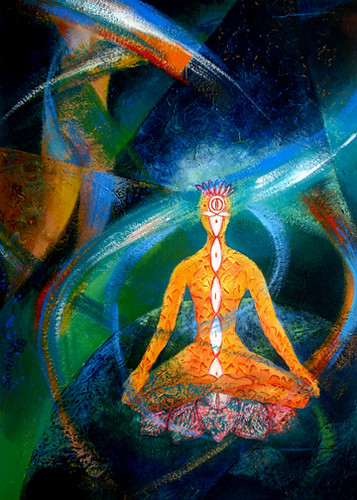
What we call history is, to a greater extent, an artificial line, defining people are either civilized or uncivilized based upon markers like writing, urban development or the use of metals that may not be crucial to the real character of people. It is unlikely that earlier humanity was any less human or any less sensitive than we are, even if they did not build cities like we do. So-called primitive peoples often produced art and literature far superior than what is being produced today.
It is also well known fact of history that so-called primitive people in the colonial era, like the Native Americans, were often more honest, kind and truthful than their European conquerors, who never honored a single treaty with them. Scientifically speaking, the yogi in a cave and the caveman are indistinguishable to the urban markers of modern civilization, though they are radically different relative to the evolution of consciousness.
In this regard, Hindu records through the Vedas and Purans suggest that human civilization – or at least some sort of advanced culture capable of spiritual development – has been going on much longer than our recorded history. These texts connect human history with longer natural and cosmic cycles, and current humanity with earlier humanities of tens of thousands of years ago.
It has also been the view of many spiritual thinkers worldwide that there were earlier humanities that underwent their own cultural developments, though not necessarily in a technological manner. The ancient Greeks, Egyptians and Babylonians firmly believed this. We are only now beginning to suspect these possibilities. What was previously regarded as the beginning of history around 3000 BCE (5000 BP – Before Present) is now being seen as part of a longer natural history, with culture, agriculture and language being much older.
The Vedas project a 'Yuga' theory of historical and cosmic development, the idea of periodic cycles of humanity and of nature, broken by great natural catastrophes. This fits in well with current scientific theories about natural history through the Ice Ages and warm periods like the one we are living in today. There are two cycles of 41,000 years and 24,000 years duration that overlap the 100,000-year Ice Age Cycle, which are main cycles of natural history scientists are looking at relative to early humanity. These are characterized by the position of the Earth's axis relative to the Sun, and therefore the amount of energy that the Earth receives. Though the exact relationships are not known, these cycles have a bearing on the world's climate and a profound effect on the life of all species. The Vedic Yuga cycle of 24,000 years reflects similar time frames.
The idea of earlier Manus and the earlier kalpas, or world-ages, such as we find in the Puranic literature, may reflect memories of these earlier phases of mankind prior to what our current culture recognizes as history. This Hindu connection to prehistoric eras of human species may be responsible for the Hindu idea of an eternal tradition of truth (Sanatan Dharma). It extends to the Hindu view of the universe, which is defined according to longer natural cycles of yugas extending into the age of the universe itself and a recognition that our current universe is only one of many that exists throughout the endless expanse of time and space.
From the standpoint of modern science, this 'Hindu view of time' better reflects the movement of natural history (and cosmology) that is marked by cycles and cataclysms over long periods of time. It stands in stark contrast to Western historical models that follow a linear and progressive model of history, generally focused on events of the last 5000 years, if not the last 500. These place human history apart from the nature's cycles and often opposed to them as well.
Such linear time models extend to Western politics and religion. The Western mind then interprets history according to its own linear models, and ignores the role of natural history and its cycles that was the real time frame in which ancient people actually lived.
As we move into an ecological age, we must once more respect natural history and natural time cycles. This will take the modern mind back in the direction of the Hindu view of time and the Hindu approach to history that has always based itself on such natural time cycles and a regard for the much greater antiquity of the human species. It also accommodates new discoveries in fields as diverse as natural history, genetics and cosmology.

Human beings and their culture arise out of the land like other species. They are part of their natural environment to which they must adapt in order to survive. Different cultures naturally reflect the circumstances of their geographic regions, climates and ecosystems. This is more important the further back in time we go and the more we look outside of urban environments, but even these are not above this law. To understand human history, we must look to natural history, particularly for ancient cultures that were much closer to the land than we are today. This begins with the facts of geography.
The motherland or Matri Bhoomi is the first guru of the people, one might say, just as the mother is the first guru of the child. The motherland of India is not only a great teacher but also a great provider of all aspects of life and humanity, holding a spiritual as well as material abundance for her children.
Mother India is not just a cultural and spiritual formulation but also a geographical reality, a unique formation of nature. With the highest mountains in the world and perhaps the greatest set of rivers, the land of India has shaped its people and its culture probably more than anything else has. This large tropical and subtropical subcontinent comes under the influence of the same natural forces of climate and geography, giving rise to similar responses from the people inhabiting the region.
India is a vast subcontinent located between the great mountain range of the Himalayas and the sea. It is a region defined by its special geography, which strongly insulates it from outside influences. The northern mountains are effective boundaries and remain almost impassable even today. The mountains to the west are part of a large desert region that serves to effectively block any easy access from that direction as well. The mountains of the east lead to successive ranges and almost impenetrable jungles in some of the wettest regions on Earth.
India's greatest access has always been by sea. From the west and into the Arabian Sea, India has a natural maritime route to the Persian Gulf, Arabia and the Red Sea. To the east through the Bay of Bengal it has an access to Greater India, Malaysia and Indonesia. Yet the southern and Eastern routes are much easier to travel because they lead to well-watered regions, while the Western sea routes cross extensive desert coastlines. Western theories like the Aryan Invasion theory that has the main culture of peoples of ancient India come from the northwest are contrary to the facts of the geography and natural history of the region that is connected more to Southeast Asia. The easy maritime access to the southeast is why in historical times Indian civilization naturally spread by sea to Malaysia, Indochina and Indonesia, following the course of the rivers and coastlines. India's geography and ecology provide the basis for its unique culture that has sustained itself through the millennia and also influenced the cultures around it which did have such as access to arable land and vast rivers.
It is a fact of history, growing out of the natural environment and geography that through most of its history India has been a maritime nation, depending upon a network of travel and trade on large rivers into the sea. Most western views of the history of India fail to take into account the natural history or the geographical ties of India, which have always been to the south and the east.
North India forms a vast plain defined by a series of great Himalayan rivers from the Indus in the west to the Brahmaputra in the east. These rivers provide an agricultural potential unparalleled in the rest of the world. While the civilization of ancient Egypt rested upon one great river, the Nile, and that of Mesopotamia on two great rivers, the Tigris and the Euphrates, ancient India had over a dozen such rivers and in a wetter and warmer subtropical climate. These great rivers of North India lead into the ocean either by the Arabian Sea or by the Bay of Bengal and would naturally have led the culture towards maritime travel as well.
South India forms a plateau but also has its great rivers like the Narmada, Krishna, Kaveri and Godavari that draw their waters from the heavy monsoon rains. The coastal regions are particularly well watered because the western and the eastern mountain ranges trap the rain-bearing monsoon winds. As a relatively small peninsula with oceans on both sides, its geography similarly creates a compelling connection to the ocean. Even connections to North India were often easier by sea than by land routes from South India.
India is blessed with probably the best agricultural region in the world. Though densely populated, even today its population is less dense than the United States when measured in terms of arable land. Its unique subtropical mountain, river and maritime ecosystem has allowed it to develop greater populations than Europe and the Middle East combined and made it a fertile ground for cultural growth. This is another reason why the idea that India needed outside populations to provide its people or its culture makes a little sense. Not surprisingly, ancient India's accounts of history and geography emphasize this great land with the Himalayas in the north, extending down to the sea, finding that to be a world in its own right and so are not much concerned with outside regions.
The greater geographical region in which India is located is dominated by two major natural forces; the tropical (and subtropical) climate and the seasonal monsoon rains. The countries of Greater India come under the same influences, depending upon rivers that flow from their northern mountains that are extensions of the Himalayas. In terms of climate and natural history, India shares more with greater India than with West Asia, Central Asia or Europe. This is reflected in the close connections between India and Greater India that go back tens of thousands of years. These run the gamut of the natural world including climate, flora and fauna and the people inhabiting the region.
We cannot, therefore, separate human achievements from the region's natural history. We must look for interpretations and explanations that connect the rhythm of nature with the progress (or decline) of civilizations. Our ancients understood this well when they sought to harmonize their lives with natural. They saw the divine manifesting everything in nature, living and non-living – from the grandest to the most humble. The Yajur Veda says:
Isavasyamidam sarvam, yatkincit jagatyam jagat.
"All this universe is pervaded by the Lord, whatsoever moving thing there is in this moving world"
The ideals of nature worship that we see in Vedic texts and in other ancient scriptures and teachings reflect a deeper connection with the Divine Spirit pervading nature. It is not at all primitive, but a progressive, all-comprehensive understanding of life. The truth of interconnectedness and interdependency, all the need of co-existence – that the human being is a part of nature and cannot survive without it – are hidden in these rituals. It reflects a deeper inner and an ecological vision, such as we are only just now beginning to discover and appreciate in this modern, ecological age.

Natural history includes the older history of our species before what we could call civilization was invented, as well as our interaction with the natural environment and its development over time.
Most history books today overlook the natural history of our species, which goes back tens of thousands of years before recorded history. This can have misleading consequences, particularly relative to the origins of civilization that depended upon earlier advances in agriculture, language and social interaction in the prehistoric era.
History books similarly ignore the importance of the natural environment as the prime factor in shaping culture and look upon political or economic factors as more significant. Yet floods, droughts and other natural calamities are usually more significant for beginning, ending or radically altering civilizations than simply internal social struggles.
Culture and civilization are primarily the human response to the natural environment and its changes. History is the record of this response. What we call history is but a phase in the natural history of our species and its greater development. Such a more 'ecological approach' to history is necessary in the current ecological age when we are again recognizing the importance of nature in shaping who we are. Human beings are part of the planet and cannot be looked upon as a species existing in isolation. Our activities affect and alter our ecosystems in ways that determine what our culture will be and how long it is likely to endure. This means that the natural history of India is the best context in which to start out examination of the human history of the region.
The natural history of India, meanwhile, is most closely related to that of Greater India(South East Asia), which has a similar pattern of mountains and monsoons in a tropical region. Therefore, one of the most significant consequences of this orientation to India's natural history takes us away from the focus on Central and West Asia as the basis of Indian civilization that has for too long dominated the discourse. This has particularly important consequences relative to the natural history of both regions over the past more than 10,000 years.
Questionable racial and linguistic theories, like the Aryan Invasion, either not based upon or even contrary to archaeological and other scientific evidence, have dominated the discourse. Or Marxist theories based upon modern ideas of politics have been imposed on ancient peoples, ignoring the natural setting in which they lived. It directs us to Greater India.

India or Bharat's own school of thought and its own world view emphasizes dharma or natural law as the main factor behind both human life and the working of the universe. It sees human history in the context of the development of life and consciousness, and not just in terms of dates, events and inventions.
The Vedic vision begins with the idea of an eternal tradition of truth, wisdom and knowledge. This, in Sanskrit is called 'Sanatan Dharma' – the eternal dharma or the way of truth. In the Vedic view, consciousness underlies the entire universe of matter, energy and mind and provides the force that motivates and moves them.
The Vedic vision has important historical ramifications. According to its view, there was a rishi or yogic culture at the beginning of human history, not only in India but throughout the world. We find the echoes of this great tradition in the many stories of the great sages, seers and prophets of ancient times – such as occur in the annals of cultures as diverse as the Mayan American, the Chinese, the Egyptian, Babylonian, Greek, Celtic and Hindu. These Hindu rishis or seers were said to have established the paths to spiritual knowledge for humanity at the beginning of this world age, which we can please roughly around the end of the last Ice Age about 10,000 years ago.
In the Vedic view, cosmic intelligence is the basis of all life. This places a greater emphasis on the evolution of consciousness than that of mere outer forms. What we see in nature is but a reflection of a deeper evolution of mind and consciousness that is a universal potential, not just a chance happening on Earth.
Consciousness pervades the entire universe, animate and inanimate. In living things, as per the limitations of body and mind, that consciousness has the capacity of feeling in the plant kingdom, and has an additional capacity of sensation in the animal kingdom. With human beings it has a power of intelligence through which the very creature can realize its oneness with God or the universal consciousness. That is the real goal of life in the Vedic sense. The Aitareya Upanishad and Aranyaka show this quite well.
 India represents one of the great civilizations of the world, with its own unique, diverse and profound culture going back many thousands of years. Notably, India has maintained the continuity of its culture perhaps better than any other civilization in the world, preserving its primary cultural and religious practices for over five thousand years. And this is going only by the preserved records in archaeology and written literature. By a proper reading of the Vedas and Purans we can get a glimpse of the primordial origins going back even before the ending of the last Ice Age.
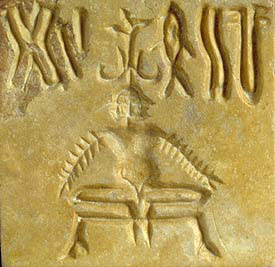
The civilization of India has always oriented itself to the spiritual life, the liberation of spirit, as the main goal of human existence. This we see in its many great yogic, religious and philosophical traditions, and in the many yogis, sadhus, mystics and sages it has produced in every generation. Whether is is meditation, yoga asanas, mantras, chanting, ritual or prayer, we find all such higher subjects taken up in great detail, depth and comprehensiveness. Certainly, at a spiritual and yogic level, India can claim to be the great mother of world civilization. We find this same focus in ancient India, whether in figures in yoga postures on ancient Harappan Seals or great Vedic chants to the cosmic powers.
Yet the civilization of India was rich not only spiritually but also materially. It had great wealth in agriculture, textiles, gold and gems that made it a goal for traders worldwide. It was this search for the legendary wealth of India which motivated Columbus to sail towards America in the first place and which had earlier brought Roma, Greek and Babylonian traders to the region.
According to economist Angus Maddison in The World Economy: A Millennial Perspective the region that today comprises the Indian Subcontinent held the largest share of the world's gross domestic product until the 16th century. India was the richest for over 75% of the world's counted calendar of history.
Ancient India also had a powerful warrior class and its own traditions of the martial arts. Complementary to the spiritual dharma was a kingly dharma to protect those leading the spiritual life and to maintain peace and prosperity for the entire region. (Most of the Mahabharata devotes itself to the raja Dharma or the way of kings, which forms an entire section of the Shanti Parva.) But India did not create a cult of foreign conquest. Even the king had to bow down before the ascetic and the renunciate and to retire to the forest for spiritual practices in his later years.
India today carries on this ancient spiritual and cultural heritage, which is developing anew in the modern world since India's return to its independence as a nation. India's gurus travel worldwide, with followers in every land, bringing deeper spiritual practices of yoga and meditation to all people. India's scientists are renowned world-wide for their skill and reliability. Its merchants are once more contribution to global prosperity and competing successfully in all major cities of the world.

Asura is a conjunction of two Sanskrit words, A meaning not or against and Sura meaning god. The word Su means good and the word Asu means not-good. With that said we can say that the word Asura means demon or one that is not good or against God.
The natures of Asuras are generally negative or evil. It is said that they are addicted to wrath, pride, boasting and are Belligerent. They are obsessed with force, are violent, always fighting and angry with everyone who are not like them.
Asuras originate from Mount Sumeru. Sumeru is said to be located in the middle of the earth. In Sumeria – Mesopotamia, Iran and Iraq there is a mountain called Sumeru. So it is safe to say that the Asuras originated from this part of the world.
According to the Sanatan Dharma the following are traits of Asuras:
It is clear that Islamic Fundamentalists (radicals) are the Asuras in this Kali Yuga. It is written that they will be the reason for the 10th avatar of Lord Vishnu, Kalki. Also remember that the word Ashura in Arabic means 10th. The Day of Ashura is a Muslim day of commemoration of Husayn ibn Ali, the grandson of Muhammad who died in the Battle of Karbala. The following are some of the other occasions that Muslims commemorate on this day but different years.
The 10th avatar of Vishnu will come down and put an end to the Asuras and begin the Satya Yuga.

Jai Sitaram.
Every year millions of
Musliman(s) go on a pilgrimage to Makkah (Mecca) in Saudi Arabia to visit the Kabba(h). The Kabba is the most sacred site of Islam. The Kabba houses a Black Stone surrounded by a silver frame which many Muslims kiss during their pilgrimage. So how is this Sacred Black Stone related to the Sanatan Dharma?
Many people believe that the Black Stone in Mecca is in-fact a Shiva Lingam.
In Tamil Lord Shiva is known as Kabbahliswar.
The following is


"Hindus have been referring their Deity moon goddess Durga as "Allah" in Sankrit in their chants since early period of Hinduism"; Ref: Kaaba a Hindu temple
He also chose Hindu God Lord Siva's temple "Kaaba" (built by King Vikramaditya for Moon God Siva) as Islam's holiest place and required all Muslims to pray and bow towards it. In addition he picked Hindu pilgrimage Haj as the highest form of worship and the only worship which washes all the sins away. He made black stone (Hajar Aswad ,the symbolic lingum of Lord Siva , which was made a part of Siva temple Kabah by King
Vikramaditya), as the most revered stone of Islam , to be touched and kissed by all pilgrims.
King Vikramaditya inscription was found in the Kaaba in Mecca proving beyond doubt that the Arabian Peninsula formed a part of his Indian Empire and that he, who highly revered Lord Siva, built the Siva temple called Kabah.. The text of the crucial Vikramaditya inscription, found inscribed on a gold dish hung inside the Kaaba shrine in Mecca, is found recorded on page 315 of a volume known as 'Sayar-ul-Okul' treasured in the Makhtab-e-Sultania library in Istanbul, Turkey. Rendered in free English the inscription says:
"Fortunate are those who were born (and lived) during king Vikram's reign. He was a noble, generous dutiful ruler, devoted to the welfare of his subjects. But at that time we Arabs, oblivious of God, were lost in sensual pleasures. Plotting and torture were rampant. The darkness of ignorance had enveloped Arabia. The entire country was enveloped in a darkness. But the present dawn and pleasant sunshine of education is the result of the favour of the noble king Vikramaditya whose benevolent supervision did not lose sight of the Arabs. He spread his sacred religion amongst them and sent scholars to Arabia from India. These scholars and preceptors through whose benevolence we were once again made cognizant of the presence of God, introduced to His sacred existence and put on the road of Truth, had come to our country to preach their religion and impart education at king Vikramaditya's behest."
Many Kabah stones have Sanskrit words inscribed, however the black curtain covers these inscriptions.
Another Hindu tradition Mohammad maintained from his Hindu days is that of the sacred water concept during Hindu pilgrimage and worship. According to the Hindu tradition sacred water (of Ganga) is also inseparable from the Shiva emblem as the crescent moon. Wherever there is a Siva emblem, sacred water must co-exist. True to that association a sacred fountain exists near the Kaaba. Its water is held sacred because it has been traditionally regarded representing Ganga water since pre-Islamic times (Zam-Zam water). Muslim pilgrims who go to the Kaaba for Haj regard this Zam-Zam water with reverence and take some bottled water with them as sacred water. (like Hindus take Ganga water home from pilgrimage). Many Muslims soak their shrouds with the sacred zam zam water, a religious tradition from their Hindu ancestry of pouring sacred Ganga water on their dead.
Prophet Mohammad also kept the Hindu religious tenet of circumambulating seven times in their religious ceremonies. Our prophet ordered Muslims to go around kabah seven times as part of Haj which was part of Hindu worship prior to capture of Mecca.
Hindus also practice all night worship of moon Goddess Durga (Allah) on certain nights called "Jagratta" and believe that by doing that their worship is worth a lot more blessings. Prophet Mohammad did not want Muslims to lose out on that count and thus included three "Jagratas" in Islam, shab-e-Qadar, Shab-e-Barat and Shab-e-Meraj when Muslim salats are worth a lot more than average salat. Practising Muslims pray during these nights to gain extra blessings.
Prophet Mohammad incorporated the following Hindu religious rituals and concepts to ensure that Muslims also get blessed by Hindu Gods Siva and Hindu Goddess Allah ( Durga)

For those who would like to read the Arabic wording I reproduce it hereunder in Roman script:
"Itrashaphai Santu Ibikramatul Phahalameen Karimun Yartapheeha Wayosassaru Bihillahaya Samaini Ela Motakabberen Sihillaha Yuhee Quid min howa Yapakhara phajjal asari nahone osirom bayjayhalem. Yundan blabin Kajan blnaya khtoryaha sadunya kanateph netephi bejehalin Atadari bilamasa- rateen phakef tasabuhu kaunnieja majekaralhada walador. As hmiman burukankad toluho watastaru hihila Yakajibaymana balay kulk amarena phaneya jaunabilamary Bikramatum".
(Page 315 Sayar-ul-okul).
[Note: The title 'Saya-ul-okul' signifies memorable words.]
A careful analysis of the above inscription enables us to draw the following conclusions:
That the ancient Indian empires may have extended up to the eastern boundaries of Arabia until Vikramaditya and that it was he who for the first time conquered Arabia. Because the inscription says that king Vikram who dispelled the darkness of ignorance from Arabia.
That, whatever their earlier faith, King Vikrama's preachers had succeeded in spreading the Vedic (based on the Vedas, the Hindu sacred scriptures)) way of life in Arabia.
That the knowledge of Indian arts and sciences was imparted by Indians to the Arabs directly by founding schools, academies and cultural centres. The belief, therefore, that visiting Arabs conveyed that knowledge to their own lands through their own indefatigable efforts and scholarship is unfounded.
An ancillary conclusion could be that the so-called Kutub Minar (in Delhi, India) could well be king Vikramadiya's tower commemorating his conquest of Arabia. This conclusion is strengthened by two pointers. Firstly, the inscription on the iron pillar near the so-called Kutub Minar refers to the marriage of the victorious king Vikramaditya to the princess of Balhika. This Balhika is none other than the Balkh region in West Asia. It could be that Arabia was wrestled by king Vikramaditya from the ruler of Balkh who concluded a treaty by giving his daughter in marriage to the victor. Secondly, the township adjoining the so called Kutub Minar is named Mehrauli after Mihira who was the renowned astronomer-mathematician of king Vikram's court. Mehrauli is the corrupt form of Sanskrit 'Mihira-Awali' signifying a row of houses raised for Mihira and his helpers and assistants working on astronomical observations made from the tower.
Having seen the far reaching and history shaking implications of the Arabic inscription concerning king Vikrama, we shall now piece together the story of its find. How it came to be recorded and hung in the Kaaba in Mecca. What are the other proofs reinforcing the belief that Arabs were once followers of the Indian Vedic way of life and that tranquillity and education were ushered into Arabia by king Vikramaditya's scholars, educationists from an uneasy period of "ignorance and turmoil" mentioned in the inscription.
In Istanbul, Turkey, there is a famous library called Makhatab-e-Sultania, which is reputed to have the largest collection of ancient West Asian literature. In the Arabic section of that library is an anthology of ancient Arabic poetry. That anthology was compiled from an earlier work in A.D. 1742 under the orders of the Turkish ruler Sultan Salim.
The pages of that volume are of Hareer – a kind of silk used for writing on. Each page has a decorative gilded border. That anthology is known as Sayar-ul-Okul. It is divided into three parts. The first part contains biographic details and the poetic compositions of pre-Islamic Arabian poets. The second part embodies accounts and verses of poets of the period beginning just after prophet Mohammad's times, up to the end of the Banee-Um-Mayya dynasty. The third part deals with later poets up to the end of Khalif Harun-al-Rashid's times.
Abu Amir Asamai, an Arabian bard who was the poet Laureate of Harun-al-Rashid's court, has compiled and edited the anthology.
The first modern edition of 'Sayar-ul-Okul' was printed and published in Berlin in 1864. A subsequent edition is the one published in Beirut in 1932.
The collection is regarded as the most important and authoritative anthology of ancient Arabic poetry. It throws considerable light on the social life, customs, manners and entertainment modes of ancient Arabia. The book also contains an elaborate description of the ancient shrine of Mecca, the town and the annual fair known as OKAJ which used to be held every year around the Kaaba temple in Mecca. This should convince readers that the annual haj of the Muslims to the Kaaba is of earlier pre-Islamic congregation.
But the OKAJ fair was far from a carnival. It provided a forum for the elite and the learned to discuss the social, religious, political, literary and other aspects of the Vedic culture then pervading Arabia. 'Sayar-ul-Okul' asserts that the conclusion reached at those discussions were widely respected throughout Arabia. Mecca, therefore, followed the Varanasi tradition (of India) of providing a venue for important discussions among the learned while the masses congregated there for spiritual bliss. The principal shrines at both Varanasi in India and at Mecca in Arvasthan (Arabia) were Siva temples. Even to this day ancient Mahadev (Siva) emblems can be seen. It is the Shankara (Siva) stone that Muslim pilgrims reverently touch and kiss in the Kaaba.
Arabic tradition has lost trace of the founding of the Kaaba temple. The discovery of the Vikramaditya inscription affords a clue. King Vikramaditya is known for his great devotion to Lord Mahadev (Siva). At Ujjain (India), the capital of Vikramaditya, exists the famous shrine of Mahankal, i.e., of Lord Shankara (Siva) associated with Vikramaditya. Since according to the Vikramaditya inscription he spread the Vedic religion, who else but he could have founded the Kaaba temple in Mecca?
A few miles away from Mecca is a big signboard which bars the entry of any non-Muslim into the area. This is a reminder of the days when the Kaaba was stormed and captured solely for the newly established faith of Islam. The object in barring entry of non-Muslims was obviously to prevent its recapture.
As the pilgrim proceeds towards Mecca he is asked to shave his head and beard and to don special sacred attire that consists of two seamless sheets of white cloth. One is to be worn round the waist and the other over the shoulders. Both these rites are remnants of the old Vedic practice of entering Hindu temples clean- and with holy seamless white sheets.
The main shrine in Mecca, which houses the Siva emblem, is known as the Kaaba. It is clothed in a black shroud. That custom also originates from the days when it was thought necessary to discourage its recapture by camouflaging it.
According to the Encyclopaedia Britannica, the Kaaba has 360 images. Traditional accounts mention that one of the deities among the 360 destroyed when the place was stormed, was that of Saturn; another was of the Moon and yet another was one called Allah. That shows that in the Kaaba the Arabs worshipped the nine planets in pre-Islamic days. In India the practice of 'Navagraha' puja, that is worship of the nine planets, is still in vogue. Two of these nine are Saturn and Moon.
In India the crescent moon is always painted across the forehead of the Siva symbol. Since that symbol was associated with the Siva emblem in Kaaba it came to be grafted on the flag of Islam.
Another Hindu tradition associated with the Kaaba is that of the sacred stream Ganga (sacred waters of the Ganges river). According to the Hindu tradition Ganga is also inseparable from the Shiva emblem as the crescent moon. Wherever there is a Siva emblem, Ganga must co-exist. True to that association a sacred fount exists near the Kaaba. Its water is held sacred because it has been traditionally regarded as Ganga since pre-Islamic times (Zam-Zam water).
[Note: Even today, Muslim pilgrims who go to the Kaaba for Haj regard this Zam-Zam water with reverence and take some bottled water with them as sacred water.]
Muslim pilgrims visiting the Kaaba temple go around it seven times. In no other mosque does the circumambulation prevail. Hindus invariably circumambulate around their deities. This is yet another proof that the Kaaba shrine is a pre-Islamic Indian Shiva temple where the Hindu practice of circumambulation is still meticulously observed.
The practice of taking seven steps- known as Saptapadi in Sanskrit- is associated with Hindu marriage ceremony and fire worship. The culminating rite in a Hindu marriage enjoins upon the bride and groom to go round the sacred fire four times (but misunderstood by many as seven times). Since "Makha" means fire, the seven circumambulations also prove that Mecca was the seat of Indian fire-worship in the West Asia.
It might come as a stunning revelation to many that the word 'ALLAH' itself is Sanskrit. In Sanskrit language Allah, Akka and Amba are synonyms. They signify a goddess or mother. The term 'ALLAH' forms part of Sanskrit chants invoking goddess Durga, also known as Bhavani, Chandi and Mahishasurmardini. The Islamic word for God is., therefore, not an innovation but the ancient Sanskrit appellation retained and continued by Islam. Allah means mother or goddess and mother goddess.
One Koranic verse is an exact translation of a stanza in the Yajurveda. This was pointed out by the great research scholar Pandit Satavlekar of Pardi in one of his articles.
[Note: Another scholar points out that the following teaching from the Koran is exactly similar to the teaching of the Kena Upanishad (1.7).
The Koran:
"Sight perceives Him not. But He perceives men's sights; for He is the knower of secrets , the Aware."
Kena Upanishad:
"That which cannot be seen by the eye but through which the eye itself sees, know That to be Brahman (God) and not what people worship here (in the manifested world)."
A simplified meaning of both the above verses reads:
God is one and that He is beyond man's sensory experience.]
The identity of Unani and Ayurvedic systems shows that Unani is just the Arabic term for the Ayurvedic system of healing taught to them and administered in Arabia when Arabia formed part of the Indian empire.
It will now be easy to comprehend the various Hindu customs still prevailing in West Asian countries even after the existence of Islam during the last 1300 years. Let us review some Hindu traditions which exist as the core of Islamic practice.
The Hindus have a pantheon of 33 gods. People in Asia Minor too worshipped 33 gods before the spread of Islam. The lunar calendar was introduced in West Asia during the Indian rule. The Muslim month 'Safar' signifying the 'extra' month (Adhik Maas) in the Hindu calendar. The Muslim month Rabi is the corrupt form of Ravi meaning the sun because Sanskrit 'V' changes into Prakrit 'B' (Prakrit being the popular version of Sanskrit language). The Muslim sanctity for Gyrahwi Sharif is nothing but the Hindu Ekadashi (Gyrah = elevan or Gyaarah). Both are identical in meaning.
The Islamic practice of Bakari Eed derives from the Go-Medh and Ashva-Medh Yagnas or sacrifices of Vedic times. Eed in Sanskrit means worship. The Islamic word Eed for festive days, signifying days of worship, is therefore a pure Sanskrit word. The word MESH in the Hindu zodiac signifies a lamb. Since in ancient times the year used to begin with the entry of the sun in Aries, the occasion was celebrated with mutton feasting. That is the origin of the Bakari Eed festival.
[Note: The word Bakari is an Indian language word for a goat.]
Since Eed means worship and Griha means 'house', the Islamic word Idgah signifies a 'House of worship' which is the exact Sanskrit connotation of the term. Similarly the word 'Namaz' derives from two Sanskrit roots 'Nama' and 'Yajna' (NAMa yAJna) meaning bowing and worshipping.
Vedic descriptions about the moon, the different stellar constellations and the creation of the universe have been incorporated from the Vedas in Koran part 1 chapter 2, stanza 113, 114, 115, and 158, 189, chapter 9, stanza 37 and chapter 10, stanzas 4 to 7.
Recital of the Namaz five times a day owes its origin to the Vedic injunction of Panchmahayagna (five daily worship- Panch-Maha-Yagna) which is part of the daily Vedic ritual prescribed for all individuals.
Muslims are enjoined cleanliness of five parts of the body before commencing prayers. This derives from the Vedic injuction 'Shareer Shydhyartham Panchanga Nyasah'.
Four months of the year are regarded as very sacred in Islamic custom. The devout are enjoined to abstain from plunder and other evil deeds during that period. This originates in the Chaturmasa i.e., the four-month period of special vows and austerities in Hindu tradition. Shabibarat is the corrupt form of Shiva Vrat and Shiva Ratra. Since the Kaaba has been an important centre of Shiva (Siva) worship from times immemorial, the Shivaratri festival used to be celebrated there with great gusto. It is that festival which is signified by the Islamic word Shabibarat.
Encyclopaedias tell us that there are inscriptions on the side of the Kaaba walls. What they are, no body has been allowed to study, according to the correspondence I had with an American scholar of Arabic. But according to hearsay at least some of those inscriptions are in Sanskrit, and some of them are stanzas from the Bhagavad Gita.
According to extant Islamic records, Indian merchants had settled in Arabia, particularly in Yemen, and their life and manners deeply influenced those who came in touch with them. At Ubla there was a large number of Indian settlements. This shows that Indians were in Arabia and Yemen in sufficient strength and commanding position to be able to influence the local people. This could not be possible unless they belonged to the ruling class.
It is mentioned in the Abadis i.e., the authentic traditions of Prophet Mohammad compiled by Imam Bukhari that the Indian tribe of Jats had settled in Arabia before Prophet Mohammad's times. Once when Hazrat Ayesha, wife of the Prophet, was taken ill, her nephew sent for a Jat physician for her treatment. This proves that Indians enjoyed a high and esteemed status in Arabia. Such a status could not be theirs unless they were the rulers. Bukhari also tells us that an Indian Raja (king) sent a jar of ginger pickles to the Prophet. This shows that the Indian Jat Raja ruled an adjacent area so as to be in a position to send such an insignificant present as ginger pickles. The Prophet is said to have so highly relished it as to have told his colleagues also to partake of it. These references show that even during Prophet Mohammad's times Indians retained their influential role in Arabia, which was a dwindling legacy from Vikramaditya's times.
The Islamic term 'Eed-ul-Fitr' derives from the 'Eed of Piters' that is worship of forefathers in Sanskrit tradition. In India, Hindus commemorate their ancestors during the Pitr-Paksha that is the fortnight reserved for their remembrance. The very same is the significance of 'Eed-ul-Fitr' (worship of forefathers).
The Islamic practice of observing the moon rise before deciding on celebrating the occasion derives from the Hindu custom of breaking fast on Sankranti and Vinayaki Chaturthi only after sighting the moon.
Barah Vafat, the Muslim festival for commemorating those dead in battle or by weapons, derives from a similar Sanskrit tradition because in Sanskrit 'Phiphaut' is 'death'. Hindus observe Chayal Chaturdashi in memory of those who have died in battle.
The word Arabia is itself the abbreviation of a Sanskrit word. The original word is 'Arabasthan'. Since Prakrit 'B' is Sanskrit 'V' the original Sanskrit name of the land is 'Arvasthan'. 'Arva' in Sanskrit means a horse. Arvasthan signifies a land of horses., and as well all know, Arabia is famous for its horses.
This discovery changes the entire complexion of the history of ancient India. Firstly we may have to revise our concepts about the king who had the largest empire in history. It could be that the expanse of king Vikramaditya's empire was greater than that of all others. Secondly, the idea that the Indian empire spread only to the east and not in the west beyond say, Afghanisthan may have to be abandoned. Thirdly the effeminate and pathetic belief that India, unlike any other country in the world could by some age spread her benign and beatific cultural influence, language, customs, manners and education over distant lands without militarily conquering them is baseless. India did conquer all those countries physically wherever traces of its culture and language are still extant and the region extended from Bali island in the south Pacific to the Baltic in Northern Europe and from Korea to Kaaba. The only difference was that while Indian rulers identified themselves with the local population and established welfare states, Moghuls and others who ruled conquered lands perpetuated untold atrocities over the vanquished.
'Sayar-ul-Okul' tells us that a pan-Arabic poetic symposium used to be held in Mecca at the annual Okaj fair in pre-Islamic times. All leading poets used to participate in it.
Poems considered best were awarded prizes. The best-engraved on gold plate were hung inside the temple. Others etched on camel or goatskin were hung outside. Thus for thousands of years the Kaaba was the treasure house of the best Arabian poetic thought inspired by the Indian Vedic tradition.
That tradition being of immemorial antiquity many poetic compositions were engraved and hung inside and outside on the walls of the Kaaba. But most of the poems got lost and destroyed during the storming of the Kaaba by Prophet Mohammad's troops. The Prophet's court poet, Hassan-bin-Sawik, who was among the invaders, captured some of the treasured poems and dumped the gold plate on which they were inscribed in his own home. Sawik's grandson, hoping to earn a reward carried those gold plates to Khalif's court where he met the well-known Arab scholar Abu Amir Asamai. The latter received from the bearer five gold plates and 16 leather sheets with the prize-winning poems engraved on them. The bearer was sent away happy bestowed with a good reward.
On the five gold plates were inscribed verses by ancient Arab poets like Labi Baynay, Akhatab-bin-Turfa and Jarrham Bintoi. That discovery made Harun-al-Rashid order Abu Amir to compile a collection of all earlier compositions. One of the compositions in the collection is a tribute in verse paid by Jarrham Bintoi, a renowned Arab poet, to king Vikramaditya. Bintoi who lived 165 years before Prophet Mohammad had received the highest award for the best poetic compositions for three years in succession in the pan-Arabic symposiums held in Mecca every year. All those three poems of Bintoi adjudged best were hung inside the Kaaba temple, inscribed on gold plates. One of these constituted an unreserved tribute to King Vikramaditya for his paternal and filial rule over Arabia. That has already been quoted above.
Pre-Islamic Arabian poet Bintoi's tribute to king Vikramaditya is a decisive evidence that it was king Vikramaditya who first conquered the Arabian Peninsula and made it a part of the Indian Empire. This explains why starting from India towards the west we have all Sanskrit names like Afghanisthan (now Afghanistan), Baluchisthan, Kurdisthan, Tajikiathan, Uzbekisthan, Iran, Sivisthan, Iraq, Arvasthan, Turkesthan (Turkmenisthan) etc.
Historians have blundered in not giving due weight to the evidence provided by Sanskrit names pervading over the entire west Asian region. Let us take a contemporary instance. Why did a part of India get named Nagaland even after the end of British rule over India? After all historical traces are wiped out of human memory, will a future age historian be wrong if he concludes from the name Nagaland that the British or some English speaking power must have ruled over India? Why is Portuguese spoken in Goa (part of India), and French in Pondichery (part of India), and both French and English in Canada? Is it not because those people ruled over the territories where their languages are spoken? Can we not then justly conclude that wherever traces of Sanskrit names and traditions exist Indians once held sway? It is unfortunate that this important piece of decisive evidence has been ignored all these centuries.
Another question which should have presented itself to historians for consideration is how could it be that Indian empires could extend in the east as far as Korea and Japan, while not being able to make headway beyond Afghanisthan? In fact land campaigns are much easier to conduct than by sea. It was the Indians who ruled the entire West Asian region from Karachi to Hedjaz and who gave Sanskrit names to those lands and the towns therein, introduce their pantheon of the fire-worship, imparted education and established law and order.
It may be that Arabia itself was not part of the Indian empire until king Vikrama , since Bintoi says that it was king Vikrama who for the first time brought about a radical change in the social, cultural and political life of Arabia. It may be that the whole of West Asia except Arabia was under Indian rule before Vikrama. The latter added Arabia too to the Indian Empire. Or as a remote possibility it could be that king Vikramaditya himself conducted a series of brilliant campaigns annexing to his empire the vast region between Afghanisthan and Hedjaz.
Incidentally this also explains why king Vikramaditya is so famous in history. Apart from the nobility and truthfulness of heart and his impartial filial affection for all his subjects, whether Indian or Arab, as testified by Bintoi, king Vikramaditya has been permanently enshrined in the pages of history because he was the world's greatest ruler having the largest empire. It should be remembered that only a monarch with a vast empire gets famous in world history. Vikram Samvat (calendar still widely in use in India today) which he initiated over 2000 years ago may well mark his victory over Arabia, and the so called Kutub Minar (Kutub Tower in Delhi), a pillar commemorating that victory and the consequential marriage with the Vaihika (Balkh) princess as testified by the nearby iron pillar inscription.
A great many puzzles of ancient world history get automatically solved by a proper understanding of these great conquests of king Vikramaditya. As recorded by the Arab poet Bintoi, Indian scholars, preachers and social workers spread the fire-worship ceremony, preached the Vedic way of life, manned schools, set up Ayurvedic (healing) centres, trained the local people in irrigation and agriculture and established in those regions a democratic, orderly, peaceful, enlightened and religious way of life. That was of course, a Vedic Hindu way of life.
It is from such ancient times that Indian Kshtriya royal families, like the Pahalvis and Barmaks, have held sway over Iran and Iraq. It is those conquests, which made the Parsees Agnihotris i.e., fire-worshippers. It is therefore that we find the Kurds of Kurdisthan speaking a Sanskritised dialect, fire temples existing thousands of miles away from India, and scores of sites of ancient Indian cultural centres like Navbahar in West Asia and the numerous viharas in Soviet Russia spread throughout the world. Ever since so many viharas are often dug up in Soviet Russia, ancient Indian sculptures are also found in excavations in Central Asia. The same goes for West Asia.
[Note: Ancient Indian sculptures include metal statues of the Hindu deity Ganesh (the elephant headed god); the most recent find being in Kuwait].
Unfortunately these chapters of world history have been almost obliterated from public memory. They need to be carefully deciphered and rewritten. When these chapters are rewritten they might change the entire concept and orientation of ancient history.
In view of the overwhelming evidence led above, historians, scholars, students of history and lay men alike should take note that they had better revise their text books of ancient world history. The existence of Hindu customs, shrines, Sanskrit names of whole regions, countries and towns and the Vikramaditya inscriptions reproduced at the beginning are a thumping proof that Indian Kshatriyas once ruled over the vast region from Bali to Baltic and Korea to Kaaba in Mecca, Arabia at the very least.
SAYAR-UL-OKUL is a poem by UMAR-BINE-HASSNAM (Poetic Title: ABBUL-HIQAM meaning Father of Knowledge). He was an uncle of prophet Mohammed. He refused to get converted to Islam. He died a martyr at the hands of Muslim fanatics who wanted to wipe out non-Muslims. This poem was adjudged as the best in the annual fair at Kaaba.
QAFA VINAK ZIQRA MIN ULUMIN TAV
ASERU KALUBAN AYATTUL HAWA VA TAZAKKARU
A man who has spent all his life in sin and immorality and has wasted away his life in passion and fury,
VA TAZAKEROHA AUDAN ELALVADAE LILVARA
VALUK YANK ZATULLA HE YOM TAB ASERU
If he repents in the end and wants to return to morality, is there a way for his redemption?
VA AHLOLAHA AZAHU ARMIMAN MAHADEV O
MANAZEL ILAMUDDINE MINJUM VA SAYATTARU
Even if only once he sincerely worships Mahadeva, he can attain the highest position in the path of righteousness.
VA SAHABI KEYAM FEEM QAMIL HINDE YOMAN
VA YAQULOON LATAHAZAN FAINNAK TAVAJ3ARU
Oh Lord! Take away all my life and in return pray grant me even a single day's stay in Hind (India) as a man becomes spiritually free on reaching that holy land.
MAYASSAYARE AKHALAQAN HASNAN KULLAHUM
NAJUMUN AZAAT SUMM GABUL HINDU
By dint of a pilgrimage of Hind a man attains the merit of noble deeds and gets the privilege of pious touch with ideal Hindu teachers.
It was Islam that extinguished the light of knowledge in Vedic Arabia. It is ironic that the man who brought about such darkness himself belonged to the Qurayshi Tribe of Mecca. The Qurayshi were particularly devoted to Allah (Durga) and the famous Shivling of the Kaaba Temple. The fact that the Shivling remains to this day in the Kaaba is solely due to the fact that it happened to be the Qurayshi tribe's faceless Family Deity. As I mentioned before Muhammad's name itself came from Mahadeva, which is another cognate for Lord Shiva. Muhammad's own uncle, Umar-Bin-E-Hassham was a staunch Hindu and fervent devotee of Lord Shiva. He was a renowned poet and wrote many verses in praise of Shiva. One of these has survived on page 235 of Sair-Ul-Okul and reads as follows:
Kafavomal fikra min ulumin Tab asayru
Kaluwan amataul Hawa was Tajakhru
We Tajakhayroba udan Kalalwade-E Liboawa
Walukayanay jatally, hay Yauma Tab asayru
Wa Abalolha ajabu armeeman MAHADEVA
Manojail ilamuddin minhum wa sayattaru
Wa Sahabi Kay-yam feema-Kamil MINDAY Yauman
Wa Yakulum no latabahan foeennak Tawjjaru
Massayaray akhalakan hasanan Kullahum
Najumum aja- at Summa gabul HINDU
which translates as:
The man who may spend his life in sin
and irreligion or waste it in lechery and wrath
If at least he relent and return to
righteousness can he be saved?
If but once he worship Mahadeva with a pure
heart, he will attain the ultimate in spirituality.
Oh Lord Shiva exchange my entire life for but
a day's sojourn in India where one attains salvation.
But one pilgrimage there secures for one all
merit and company of the truly great.
However, more significant was the fact that the Kaaba was an extremely rich and ornate temple. On its walls hung innumerable gold plaques commemorating the winners of the annual poetry competition known as the Okaj fair. There were gold, silver and precious gems everywhere. It is no wonder that Muhammad armed with his facade of a new brand of religion set out to capture the immense wealth of the Vedic shrine of Mecca. After plundering the riches of the Kaaba, the wealth enabled him to systematically destroy all traces of the religion that threatened him so directly. It is an indisputable fact that money will make any low criminal devoutly religious in a hurry.
All Arabic copies of the Koran have the mysterious figure 786 imprinted on them . No Arabic scholar has been able to determine the choice of this particular number as divine. It is an established fact that Muhammad was illiterate therefore it is obvious that he would not be able to differentiate numbers from letters. This "magical" number is none other than the Vedic holy letter "OM" written in Sanskrit (Refer to figure 2). Anyone who knows Sanskrit can try reading the symbol for "OM" backwards in the Arabic way and magically the numbers 786 will appear!
