Showing posts with label Aryan Invasion Myth. Show all posts

Friday, October 8, 2010

Indo-European? The Issue Of Language And The Problem Of Linguistics In Relation To The History Of India


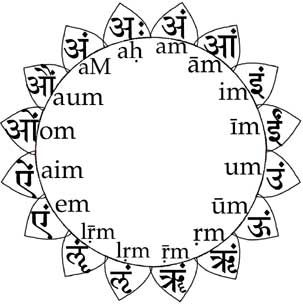
According to many spiritual traditions, East and West, in the beginning was the Word. This is true both of cosmic creation and of human history. Speech is the basis of all human culture. In the Vedic view, the faculty that most defines the human beings is speech, the essence of which is OM, the cosmic sound that creates the entire universe through its vibratory power.


The key to the origins of civilization and high thinking in humanity is linked to the development of speech. Other marks of civilization like writing and urban constructions are secondary and became possible only because of the spoken word. Yet speech arose much earlier in history than urban civilization, and it is likely that some form of speech has been with modern humans since our origins a hundred thousand years ago or more. Some societies that have not used writing have also had a high degree of verbal skills through oral poetry and story traditions.


The study of the ancient world must consider the development of ancient languages and, when existent, their literary records. In this regard, India has left us the greatest literature of the ancient world, the Vedic, and the greatest language, Sanskrit. This in itself tells a lot about the importance of Indian Civilization, its continuity and its antiquity. Only a great culture could produce and preserve such a language that has endured when all other great ancient languages have fallen into extinction.


Yet language records, by which we mean written texts, go back only some 5000 years, and even then only in fragments. This means that we cannot reduce ancient languages and the development of human speech to the available written records, however useful these might be. Efforts to explain the current languages of India have been based upon proposed migrations of people over the last three or four thousand years only. Now we can see that these follow too short a time frame to account for cultural developments and connections in the region, which were already well in place before this period.


Our modern view of the ancient world is colored by another modern discipline apart from archaeology. This is linguistics, or the comparative study of languages. Linguistics attempts to recreate postulated ancient languages. It then tries to use these creations to recover the history and the movements of people as if language was the primary determinative factor in how or why people migrated. This is sometimes called historical linguistics.


However, we must remember that linguistics is not a hard science like genetics nor based on technical evidence like archaeology. There is no genetic material in the human being that can be identified with particular languages or language families. There is, for example, no Indo-European gene or Dravidian gene or Sanskrit gene!


Linguistics reflects certain assumptions about language and its development that linguists have today. The assumption that ancient people viewed and developed their languages many thousands of years ago, the way we theorize they did cannot be accepted as scientifically proven. As we shall soon discover, science casts serious doubt on it.


For these reasons, we cannot treat linguistics as a primary source for determining what occurred in the ancient world. It may be of secondary value, it at all, for refining correlations based on more solid forms of evidence.


The discovery of connections between Sanskrit and many Languages of Europe, the Middle East and Central Asia, caused nineteenth century scholars to posit an 'Indo-European' family of languages. Such ancient languages as Latin, Greek, Iranian and Sanskrit have many affinities as do later languages in the Germanic, Slavic, Baltic and others. This led them to posit some original Proto-Indo-European language behind all these from which these different languages arose as branches.


Based on this idea, scholars proposed an original homeland of this Proto-Indo-European group somewhere in Central Asia as a kind of common point of dispersion in different directions. They also proposed that the Vedic language and culture arose as a result of migrations from this region. In addition, many tried to relate this original linguistic group with some sort of racial identity or ethnicity, not surprisingly European Caucasoid! The term 'Aryan language' is an invention of Western scholars used to mean such Indo-European languages – historical and reconstructed.


Yet the fact that Indo-European languages are related in some ways is no proof that they evolved from a single language, much less the place or time when that might have occurred. The so-called Indo-European languages have connections with non-Indo-European languages as well. The similarities between Indo-European languages can be explained in other ways than from a migration into India, for which there is no evidence. For example, there could be movements out of India or other forms of cultural diffusion.


The division of languages into families is not watertight. Vedic Sanskrit has affinities with the Dravidian and Munda languages of India also. These connections extend to common loan words and common grammatical formations even for languages that might be classified as otherwise belonging to different language families. There appears to be no easy way of fitting languages into separate families.


Our view is that just as India has maintained a continuity of peoples and cultures within its geographical zone, the same is true of its languages. A region that could develop great languages like Sanskrit and Tamil cannot be held deficient as far as language is concerned. Indeed, Vedic grammar and linguistics as reflected in Panini and other more ancient texts is the most sophisticated in the world. The creative genius of India has long gone into language, grammar, metrics, etymology, mantra and other language studies, both scientific and spiritual. It is hardly a linguistic vacuum zone, only borrowing its languages from the outside, as some linguists propose. As with genetics, so with languages. The greatest diversity and the highest antiquity of Sanskrit and its derivatives are found in India. This is strong evidence that Sanskrit was born in India.


A major problem with migration theories of languages – which include the idea that the original Sanskrit speakers migrated to India sometimes after 1500 BCE (3500 BP) – is that it was rather late in the ancient period in which populations, civilizations, customs and languages were already well established.


The main migration of peoples and of languages would have been from the south and east at the end of the Ice Age. This was a consequence of natural history and the climatic upheavals that took place at the time. It was at this time that disruptions owing to climate changes would have created the maximum necessity for such movements of people. Yet if post-Ice Age events were the main impetus behind the development of both languages and cultures, it would make most of the languages of the world order than current estimates.


At best, the Indo-European group of languages reflects older cultural connections that began with these movements of peoples at the end of the Ice Age. The dominance of so-called Indo-European civilizations like India, Iran, Greece, and Rome aided in the continuity of such linguistic groups, but not their origin.


In this regard it is helpful to look at what current science has to say about the language problem. Recent studies in the human genome suggest that some mutations in a gene called FOXP2 may have triggered the uniquely human capacity for speech and therefore language. Dates are uncertain, but all humans inhabiting the world today – traceable to an exodus from Africa perhaps 90,000 years ago- possess this capacity. Hence it is reasonable to suppose that the necessary mutations in speech production, hearing and cognition (comprehension) must have taken place 100,000 years ago at the least. – See "Molecular evolution of FOXP2, a gene involved in speech and language"


Chronology is not the only problem with linguistics as a tool in history. Linguistics methods fail scientific tests also. As published in Mathematics in the archaeological and Historical Sciences, when Kruksal, Dyen and Black applied statistical tests to the languages that make up the Indo-European family, they found results that contradicted the most basic assumption of linguists – that they form a language family. The most important member is of course Sanskrit, but their analysis threw up a major contradiction: Indian and Iranian languages failed the grouping test! This is a bombshell, for according to Info-European linguistics, Indo-Iranian is the lynchpin of the whole discipline, but the one quantitative test that was applied to the hypothesis discredited it.


Struck by this, Cavalli-Sforza highlighted that the Kruksal, Dyen and Black study "…found no similarity at all between Italic and Celtic languages, nor between Indian and Iranian ones… The non-identification of an Indo-Iranian group by Dyen et al. is the major departure from the conclusions accepted by the majority of traditional linguists. See "Great Human Diasporas" Addison-Wesley, 1995: page 190. In other words, much of what was regarded as solid fact in linguistics remains highly questionable, if not outright wrong.


The point to note here is that the tests do not deny that Sanskrit and ancient Iranian (Avestan) are related. They question the methodology used in deriving language families, which is the main tool of comparative linguistics. Since comparative linguistics is the basis of various migration theories, including the Aryan invasion (or migration) theory, it is hardly surprising that both comparative linguistics and invasion-migration theories should have fallen victims to rigorous scientific analysis. Both now stand discredited for the same reason: they are unscientific.



Thursday, October 7, 2010

Aryan and Caste


Unfortunately, these proposed Vedic Aryan hordes have been portrayed by western historians as primitive Nazis bringing racial oppression into ancient India. These mythical Aryan invaders have been attributed with caste oppression and all other Indian social evils. Yet such scholars fail to note that the type of class and clan society we find in the Vedas is much like what existed throughout the ancient world, continues in tribal societies everywhere, and persists in some forms in modern societies as well. It is not an Aryan invention.


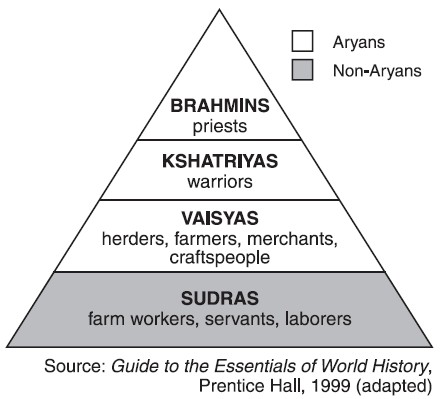
The rule was the same in most ancient cultures; chieftains and priests formed a special group at the top. The common people were divided into merchants, farmers and servants, with some populations on the outside of the social order kept in the distance. Such a division does not reflect any single political or religious ideology, much less a particular ethnicity, but just the practicalities of organizing society in the pre-technological and largely non-urban world (even in the Harappan area with its numerous urban sites the great majority of people lived in villages).


There is no need to invent the Aryans to bring in the caste system, any more than to bring in the Sanskrit language. The pride of birth is high and often an important source of status in all cultures and societies. It does not require invaders to produce it. Such abuse of status is a common human problem, which continues today in various forms. It cannot simply be used to blame some mythical Aryans of thousands of years ago.


Yet today, even when most western historians have rejected the scenario of the pillaging Aryan hordes, they are doing very little to correct the distortions caused by it, often allowing these wrong accounts to continue in old textbooks without revision. They have thereby allowed the anti-Hindu or anti-Vedic sentiments generated by such ideas to go on without any serious challenge. Such characterizations border on racism and breed conflict and misunderstanding. It is necessary to remove these Aryan distortions for a correct view of ancient India. That is the part of the purpose of writing these articles.

The Aryan Invasion Continued


When we open a history book used in our schools today, we find that it invariably begins with a description of the Indus Valley Civilization. It usually starts off with an account of the discovery of the two major sites Harappa and Mohenjodaro, followed by a brief description of what was found there. We will also be told how this civilization went into decline and finally disappeared by 1500 BCE (3500 BP). The main cause of this disappearance, the reader is then informed, was the invasion of India by nomadic tribes from Central Asia called the Aryans. According to this account, these invading Aryans, who are said to have entered India through the passages in the northwest, fought and overcame the inhabitants of the Indus Valley and established themselves over much of North India. They are then said to have composed their literature, the most important of which is the Rig Veda. This history of India begins in earnest with the records of the Aryans following their invasion. This in essence is the account of ancient history found not only in school books, but also in such authoritative sources as the Encyclopedia Britannica.


The modern science of molecular genetics has demolished the whole notion of the Aryans. Archaeology also has disproved the idea of an Aryan invasion. In addition to political and racial ideas that were given a linguistic garb, some religious beliefs also played a part in creating the Aryan Invasion Theory. In the 19th century Europe many students were taught the Biblical superstition that the world was created in its present form with all its life forms on 23rd October 4004 BCE. European scholars steeped in this belief, could not accept that Indian history and civilization went much further back in time. So they distorted and misinterpreted records to fit their own limited worldview.


In recent years, recognizing that the Aryan Invasion Theory has been disproved, some scholars are proposing something they are calling the Aryan Migration Theory. This, too, is no more valid. All the old contradictions remain and some new ones arise as well. These both are rejected for the same reasons.

The Aryan Fantasy – More Truth About The Aryan Invasion Myth


"ARYAN" – No single aspect of ancient Indian history has so dominated historical discourse as the so-called 'Aryan problem'. In the 19th century, European scholars, new to the study of India, proposed an 'Aryan invasion' that was supposed to have brought the Vedic civilization and the 'Aryan language' (Sanskrit) to India from the Aryan west. The theory led to the illusory idea of an Aryan race, generally blond and blue-eyed which fuelled a pathological attempt to recreate an Aryan nation years later in, of all places, Germany!


Even archaeology has not escaped the Aryan obsession, with scholars claiming that the Harappan civilization was non-Aryan, destroyed by the invading Aryans. Mortimer Wheeler, one of the early Harappan archaeologists, went so far as to try to read an Aryan massacre into skeletal remains he found at Mohenjodaro, which he highlighted with great drama and which has entered into many textbooks, still used to the present day. Through later archaeology disproved Wheeler's finding as a case of imagination gone wild, showing that the skeletons showed no evidence of violent deaths, and no Harappan sites have ever been found that were destroyed by outside invaders, archaeologists still talk about the incoming Aryans, hoping to find them eventually, somewhere! Meanwhile the depiction of the Aryans has retreated from massive destructive hordes to small groups of undetectable migrants, hoping to preserve the theory even if no evidence in favor of it can be found. The Aryan idea appears more like an article of faith for western historians than anything inherent in the facts coming out of India. What is the reality?


In the whole world of the Rig Veda, consisting of ten books and more than a thousand hymns, the word 'Arya' appears fewer than 40 times. It may occur as many times in a few pages of a modern European work like Hitler's Mein Kampf, where there is no doubt about its racial meaning. As a result, any modern book or even discussion on the 'Aryan problem' is more likely to be a commentary on recent European thought on the Aryans than anything really relevant to ancient India of many thousands of years ago.


The use of the term Aryan can be compared with the fear of the Swastika as a symbol of racism and hatred, which it is often falsely combined. The Swastika is an old Vedic symbol of good fortune, found in the oldest archaeological sites in India. It is found among other people also, including in pre-Columbian Native American tribes. The Nazis probably got their swastika symbol from ancient Roman ruins like Pompey where also it is found rather than directly from India. It is a solar symbol of enlightenment that the Buddhists and Jains also adopted. Other than the gross misuse by the Nazis, the Swastika – more popularly the Svasti – has been used as a symbol of goodwill and well-being all over the world. Except for the fleeting period of Nazi misuse, the Swastika has been a universal symbol of peace and prosperity.


The Rig Veda and all of Sanskrit literature that followed never refer to Aryans in this modern sense of the word. Aryan was an important title of respect, roughly comparable to the English word 'sir' or 'gentleman'. It was used to symbolize nobility and refinement of behavior and character, not a pattern of bias and prejudice to which it has been turned into by modern writers! The ancient Sanskrit lexicon Amarakosha identifies it as a synonym for honorable or praiseworthy conduct.


There is no reference to any 'Aryan' type, race or tribe as a term of ethnicity in Sanskrit literature. There is only Aryan as certain type of high culture or lofty code of conduct. Even the Buddha called his religion 'Arya dharma' in this manner. We cannot imagine Aryans conquered ancient India and took over all titles of respect in the country, any more than we can imagine that a tribe of Englishmen named 'sir' took over all main positions of power in England!


The Vedic deities or Devas were regarded as forces of light and their enemies were regarded as forces of darkness, just as was the case for many ancient solar religions, from America and Egypt to Europe and India. But this was not meant as a racial statement, but just the natural symbolism of light and darkness.


Yet the truth is that after two hundred years and many books on the subject of the Aryans, scholars are still unclear what the Aryan identity is. At first the Aryans were supposed to be a race of distinguished by physical traits like white skin, blond hair and blue eyes, but given the lack of any evidence for such types in India or Iran, countries of the most ancient Aryan cultures, this has largely been given up. Other scholars have gone so far to identify Aryan as Caucasian, though there are many Caucasian groups that have darker skin and many others who do not speak so-called Aryan languages. Scientists, too, have no use for the 'Aryan race'. As far back as 1939, Julian Huxley, one of the great biologists of the 20th century, dismissed it as part of "political and propagandist" literature.


Genetics is a new science that is adding important new information about human origins, but even with it some initial data has been distorted by the Aryan obsession. A recent study conducted by Bamshad et al. al the University of Utah claims to have found evidence of western, possible Indo-European or Aryan peoples in the DNA of some South Indian peoples (actually too small a group to prove the point). Their claims that they have identified genes relating to tribes and even castes (and sometimes language!) make NO scientific sense. Their study resembles Wheeler's imaginary massacre at Mohenjodaro. This genetic study has similarly been discredited by more important thinkers in the field. Eminent geneticists like L. Cavalli-Sforza and Stephen Oppenheimer have rejected it. See: Genetic Evidence on the Origin of Indian Caste Populations by M.Bamshad, T.Kivislid, W.S. Watkins, M.E. Dixon, C.E. Ricker, B.B Rao, J.M Naidu, B.V.R Prasad, P.G Reddy, A. Raganagam, et al. 2001, Genome Research 11, pp 994-1004. According to them the M17 genetic marker, which is supposed to distinguish the 'Caucasian' type, occurs with highest frequency and diversity in India, showing that among its carriers, the Indian population is the oldest.


Archaeologically speaking, the search for Aryan skeletons in India has not come up with anything either. There are to date no ruins, remains, encampments or settlements of any invading Aryans that anyone has ever been able to show or prove to have existed apart from indigenous developments.


Sensitive to the disrepute that race theories have fallen into, some scholars hold on to the Aryan term but as referring to a linguistic group. This began with the German-born Indologist Max Muller, one of the main proponents of Aryanism, who made a celebrated switch from Aryan as a race to Aryan as a language. Yet the vast body of Indian literature on linguistics, the richest in the world going back to yaska, Panini and Vedic texts, knows nothing of any Aryan language as the dialect of a particular group of people. When used relative to language, Aryan refers to noble or cultured speech, like well-educated individuals who speak good Sanskrit, similar to people speaking good English versus those speaking common or vulgar forms. This does not means that those speaking unrefined speech are speaking a different language or are of a different ethnicity!


The 'Aryan Nation' or Aryan racial purity was the battle cry of German nationalists, not ancient Indians. To look at ancient Sanskrit terms in light of their modern European redefinitions cannot lead us anywhere in understanding the ancient world, however much political passion it may arouse.


All this means that the 'Aryan problem' is mainly a non-problem – an aberration of wrong history and inaccurate semantics. It has been kept alive by certain historians, who have taken the Sanskrit term to mean what they would like it to. According to its advocates, because of linguistic similarities with languages of Europe and central Asia, the Vedic language and literature must be of non-Indian origin, and so must have been brought in by a different ethnic group, whom these propose was the invading or migrating Aryans. This proved not by any evidence of these incoming Aryans, but by the linguistic requirements of modern theories.


In other words, certain scholars have invented the Aryans as a people to give justification of their own theories. The idea of the invading Aryans was proposed even before any major archaeological finds relative to ancient India were made, and continued long after archaeology contradicted the invasion idea. It has ignored or distorted those finds that came later. Aryans are needed because without them there can be no Aryan invasion (or migration) needed to justify certain linguistic theories. In the face of all this it is best to ignore labels and look simply at the record of the people who lived in India and created her unique civilizations.


Tuesday, October 5, 2010

Natural History and Genetics – Aryan Invasion Myth Dispelled


In recent decades, there have been significant advances in our knowledge of our past thanks to new techniques based on genetic mapping. As this is very new discipline, still learning to define itself and its capacities, there remains a good deal of controversy but this much seems to be reasonable certain: our ancestors or Homo sapiens originated in Africa around 150,000 years ago. A small group eventually left Africa some 80,000 years ago and settled along the coast of South Asia from which they gradually spread out to colonize different parts of the world. All non-Africans in the world today are descended from a small group of south Asians living south of a line from Yemen to the Himalayas, especially from those along the Indian coast. This means that after Africa, India is the second homeland of our human species. Geneticists like L. Cavalli-Sforza and S. Oppenheimer have noted that settlers in the coastal regions of India were the source ('inocula') for the population of India. Some of them later migrated northwards and westward to populate Europe. This is the exact reverse of the various migration-invasion theories (like the Aryan invasion) advanced by linguists and anthropologists who sought to derive Indians and their civilization from Central Asia, Eurasia, or even Europe. See for example, Eden in the East by Stephen Oppenheimer (2003).

This 'founder group', from which all non-Africans are descended, barely survived the fallout from a volcanic eruption in Sumatra known as the 'Toba Explosion', 74,000 years ago. The Toba Explosion was the greatest catastrophe ever to hit humanity. It almost put an end to non-African human populations, but a core group survived in India, which became the jumping off point for the ultimate colonization of the world. This does not mean that there were no non-African humans before the Toba Explosion, but only that descendants of those earlier populations have not survived outside of Africa. Apparently another group out of Africa 120,000 years ago made its way to Egypt but disappeared 90,000 years ago without leaving a genetic trace. This means that the Indian population is largely indigenous from the earliest times of the Toba Explosion and is not the result of recent migrations as held by many historians and anthropologists.

The Europeans were among the descendents from these early South Asians, possibly as recently as 40,000 years ago. South Asia, India in particular, was the jumping off point for the colonization of East Asia, Greater India, Australia and ultimately the Americas.

The data for this is summarized by Luigi Luca Cavalli-Sforza, arguably the world's foremost population geneticist, and his colleagues, in the following words:

"Results show that Indian tribal and caste populations derive largely from the same genetic heritage of the Pleistocene southern and Western Asians and have received limited gene flow from external regions since the Holocene. The phylogeography [neighboring branches] of the primal mtDNA and Y-chromosome founders suggests that these southern Asian Pleistocene coastal settlers from Africa would have provided the inocula for the subsequent differentiation of the distinctive Eastern and Western Eurasian gene pools. " – The Genetic Heritage of the Earliest Settlers Persist Both in Indian Tribal and Caste Populations: by T. Kisilvid, S.Rootsi, M. Metspahi, S. Mastana, K. Kaldma, J. Parik, E. Metspalu, M. Adojan, H.-V. Tolk, V. Stephanov, M. Golge, E. Usanga, S.S. Papiha, C. Cinnioulu, R. King, L. Cavalli-Sforza, P.A. Unterhill and R. Villems. 2003. American Journal of Human Genetics, 72: pp 313 – 332.

Put in non-technical language, it means that the Indian population and all its varied constituents, however defined – upper castes, lower casters, tribal (or so-called indigenous peoples), Dravidians and so forth – are all mainly of indigenous origin, and the contribution of immigrants (gene flow) is negligible. This is a major blow to the many invasion-migration theories that continue to dominate historical discourse in India. In particular, the various theories about Aryans and non-Aryans have no scientific basis whatsoever. In fact, such genetic information calls into question the entire concept of race as a primary factor for explaining the movements of people in ancient history.

Seen against this background, it is natural that the human inhabitants of India and Greater India, like the climate and its flora and fauna, should remain closely related. This is precisely what recent biological studies have also revealed. And this connection goes back at least 50,000 years. It is the descendants of these early humans who created both Indian and Greater Indian civilizations – art, archaeology and literature. Their influence also spread north and west.

This means that contrary to older views that India was mainly populated from the outside in historical times, India has actually been a major source of the world's populations going back many tens of thousands of years, of which the movement at the end of the last Ice Age was the largest and the most important.

Human Migration Timeline:

  1. 150,000 years ago Modern humans – out mtDNA ancestors – lived in Africa
  2. 120,000 years ago A group of humans travelled northward through Egypt and Israel but died out 90,000 years ago
  3. 80,000 years ago A group of humans travelled through the southern Arabian peninsula towards India. All non African people are descended from this group
  4. 75,000 years ago Modern humans moved east from India to Southeast Asia and China
  5. 70,000 years ago Humans crossed from Timor to Australia
  6. 46-50,000 years ago Homo Sapiens entered Europe. Most Europeans today can trace their ancestry to mtDNA lines that appeared between 50,000 and 13,000 years ago
  7. 40,000 years ago Humans trekked north from Pakistan up the Indus River and into Central Asia
  8. 40,000 years ago Humans from the East Asian coast moved west along the Silk Road
  9. 20-30,000 years ago Central Asians moved west towards Europe and east towards Beringia.

India and Greater India – Ice Age and Beyond


The natural history of our species is dominated by one very significant natural event over the last fifteen thousand years. This is the end of the last Ice Age. The end of the Ice Age radically changed climates worldwide, submerged extensive coastal regions and caused extensive migrations of people. Its effects on India and Greater India were particularly important, devastating and transforming to the entire environment. These events form the basis of any real examination of the history of the region or of the history of humanity as a whole.

India's links with Greater India were even closer ten thousand years ago and earlier during the Ice Age period when the whole region – from peninsular India to Indonesia – formed at various times either a single landmass or a massive archipelago of islands and peninsulas separated by relatively shallow, easy to cross sea-lanes. This created a vast landmass known as 'Sunda Land'. Large areas of Sunda Land along with substantial strip of the Indian coast were submerged by rising sea levels when the last Ice Age ended. This has to be the natural background from which to begin any study of the history and culture of the Indian people. Their history cannot be set apart from these natural connections with Greater India and its populations. Nor can we ignore the impact of the cataclysms on the inhabitants of the region.

Sunda Land and South India, especially the coastal regions, were the most favorable places for populations. Since they both had abundant heat and moisture, throughout the Ice Age period, when much of the northern hemisphere was cold, arid and inhospitable. This may be reflected in South Indian recollections of Kanya Kumari, a larger Pacific continent to the South, and to Vedic references to the sea and early maritime cultures. It is also why the peoples of India and regions referred to as Greater India are genetically older and more diverse than those of Europe and West Asia. This is because these regions constitute a single natural zone united by geography, climate and natural history. In view of this unity which is of untold antiquity and is also reflected in the history and culture of the region, it is properly called Greater India. Modern terms like Indo-China and Indonesia are no more than recognitions of this historical fact.

When sea levels rose, it was these best habitable lands that were lost, triggering migrations to the interior and the north. This was probably the greatest and most consequential migration in human history that set in motion most of the cultures and changes to civilization that came later. It holds one of the keys to understanding the region's prehistory along with its chronology.